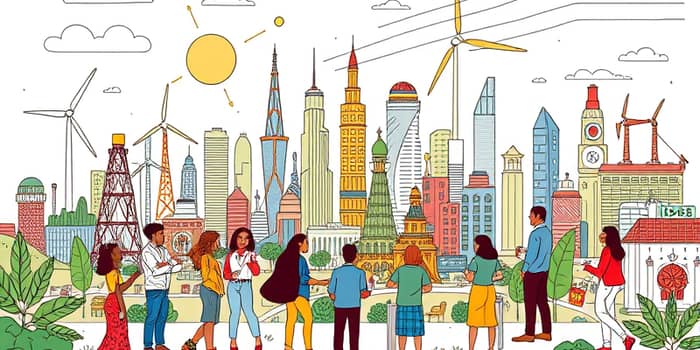
In an age defined by rapid change, traditional economic paradigms are under pressure. From AI breakthroughs to climate imperatives, the period 2025–2030 will test our ability to adapt, innovate, and thrive. Organizations and individuals alike must embrace new models that foster resilience and shared prosperity.
By harnessing transformative trends and reskilling your workforce for tomorrow, we can create sustainable opportunities that withstand future shocks.
Embracing Tech-Driven Transformation
Artificial intelligence, robotics, and advanced energy systems are reshaping industries at an unprecedented pace. According to the Future of Jobs Report 2025, 60% of employers expect AI to transform operations by 2030, while 58% cite automation and 41% highlight energy innovation.
Businesses must integrate technology strategically to drive growth. Key actions include:
- Investing in AI literacy and automation tools
- Partnering with research institutions for cutting-edge R&D
- Implementing flexible digital platforms for remote collaboration
Navigating the Green Transition
Climate change presents both a challenge and an opportunity. Nearly half of global employers recognize climate mitigation as a transformative force. Demand is surging for renewable energy engineers, environmental specialists, and electric vehicle technicians.
To lead the green revolution, organizations should:
- Adopt clean energy solutions like solar and battery storage
- Develop carbon-capture and sustainable manufacturing processes
- Align investments with Environmental, Social, and Governance criteria
These steps can unlock new markets and bolster corporate reputation while driving sustainable long-term growth.
Adapting Skills for the Future
As 170 million new roles emerge and 92 million positions vanish, the net gain of 78 million jobs will reward those who upskill. The fastest-growing occupations include Big Data Specialists, AI and Machine Learning Experts, and Renewable Energy Engineers. Frontline and care-economy roles also expand in absolute numbers.
Top skills rising in demand include AI and Big Data, Networks and Cybersecurity, and Technological Literacy. Soft skills such as creative thinking, lifelong learning, and environmental stewardship are also crucial.
Strategies for Businesses and Policymakers
To capitalize on these shifts, a coherent strategy is essential. Prioritize workforce transformation by:
- Launching company-wide reskilling and mentoring programs
- Aligning wage growth with enhanced productivity
- Reorienting organizational structure around AI-driven processes
- Expanding diversity and inclusion to tap global talent pools
Policymakers can bolster progress through targeted incentives: subsidizing green technologies, streamlining regulatory approval for clean energy infrastructure, and funding public-private training partnerships. By unlocking unprecedented potential in disrupted markets, governments and businesses can foster shared prosperity.
Human Creativity in the Age of AI
AI-generated solutions now rival human ideation in efficiency and quality. Research shows AI can produce sustainable business concepts faster and more cheaply than traditional crowdsourcing. Yet humans excel in breakthroughs and novel thinking.
The future belongs to hybrid teams where machines handle data-intensive tasks and humans provide strategic insight. Embracing this synergy will:
Empower knowledge synthesis over rote problem solving and democratize innovation by equipping all contributors with AI decision-support tools.
Building Resilient Economies
Geoeconomic fragmentation and demographic divergence add complexity. High-income nations face aging populations and labor shortages, while lower-income regions experience youthful workforce growth. Trade restrictions and industrial policies are reshaping supply chains.
Resilient economies will balance local strengths with global linkages, invest in lifelong learning systems, and maintain open innovation networks. Anchoring economic models on adaptability and inclusion can mitigate volatility and foster trust.
Conclusion: Shaping a Shared Future
The decade ahead demands a bold reimagining of economic structures. By integrating advanced technologies, transitioning to a green economy, and empowering individuals through skill development, we can break free from outdated molds.
Commit today to proactive strategies—embrace AI responsibly, champion sustainability, prioritize human capital, and foster cross-sector collaboration. Together, we can build economic models that not only withstand disruption but also elevate living standards for all.
References
- https://www.weforum.org/publications/the-future-of-jobs-report-2025/digest/
- https://www.nobelprize.org/prizes/economic-sciences/2025/press-release/
- https://www.library.hbs.edu/working-knowledge/seven-trends-to-watch-in-2025
- https://www.wipo.int/en/web/global-innovation-index
- https://www.oxfordeconomics.com/key-themes-2025/
- https://solve.mit.edu/challenges/2025-global-economic-prosperity-challenge
- http://www.pokutta.com/blog/random/2025/10/14/economics-nobel-and-germany.html