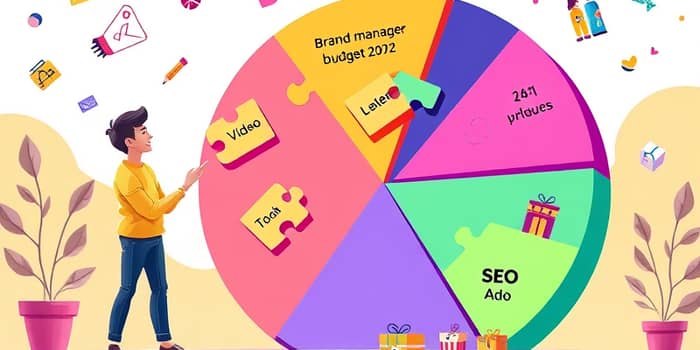
In a landscape where consumers gravitate toward the brands they love, allocating resources wisely can mean the difference between fleeting interest and lifelong loyalty. As budgets tighten and expectations soar, marketing leaders must transform spending into strategic investments that build loyalty and customer advocacy.
By 2026, pressure from CFOs to demonstrate impact in real time is at an all-time high. Finance teams demand clarity on every dollar, while brand managers seek to maintain both top-of-mind awareness and sustainable growth. Smart budgeting has become the linchpin of competitive advantage.
Why Strategic Budgeting Matters
Marketing budgets in 2026 average between 7% and 10% of revenue, yet 59% of CMOs still report insufficient funds. With scrutiny on every line item, brands must adopt a balanced marketing funnel approach that aligns with overarching revenue goals.
Focusing on channels that deliver measurable returns and investing in analytics tools can transform a static plan into a dynamic roadmap. Companies that leverage first-party data and nurture owned audiences often enjoy lower acquisition costs and higher lifetime value.
2026 Budget Benchmarks by Business Stage
Understanding where your brand stands can provide context for allocating funds and setting realistic targets. The table below outlines recommended marketing spend as a percentage of revenue.
69% of B2B marketers plan increases, with median rises of 5% and averages near 22%. Yet, overall budgets remain flat at 7.7% for many sectors. Brands must tailor allocations to their stage and industry while accounting for CFO demands and market volatility.
Aim for an LTV:CAC ratio of at least 3:1 to justify any above-benchmark spend. Quarterly reviews and scenario modeling help maintain agility when market conditions shift.
Allocating Across Channels for Maximum ROI
Once your total spend is defined, distributing it across channels becomes critical. Prioritizing high-ROI tactics for product visibility ensures your favorite products reach receptive audiences without waste.
- SEO/Content (10–15%): 1.5
- Email Marketing (15–20%): Generates $36–42 per $1 spent on owned lists.
- Paid Social (10–15%): Delivers 1.5
- Video Production (10–12%): 91% adoption; short-form content drives 41% of video ROI.
- MarTech & AI Tools (8–10%): Improves efficiency by 15–25% with predictive analytics.
- Influencer Partnerships (5–8%): Yields $5.78 per $1 invested in creator collaborations.
Maintain a 15–20% reserve for testing emerging platforms and AI-driven formats. Encourage cross-functional teams to review performance weekly and shift budgets in real time based on click-through, conversion, and retention metrics.
Sample Budget Models for Product-Focused Brands
While every brand’s needs differ, the following models illustrate practical frameworks for a $250K marketing budget:
Model 1: ROI-Centric: $175K on email, SEO, and PPC; $50K on YouTube sponsorships, influencer collaborations, and community events; $25K on TikTok launches and AI-based ad testing.
Model 2: Customer Flywheel: $50K on demand generation (ads and SEO); $75K on email series, webinars, and case studies; $125K on loyalty programs, exclusive communities, and referral incentives.
For emerging brands at $2K–3K per month, allocate $1K to paid ads, $500 to SEO/content, $300 to email platforms, and $200 to social media management. As revenue grows, scale each channel incrementally, reviewing ROI thresholds before increasing spend.
Trends Shaping Marketing Budgets in 2026
Several dynamics are driving budget decisions this year. Digital channels now command over 50% of total spend, with AI utilities in planning, personalization, and analytics expanding from 7% to 9% of budgets.
Despite growth aspirations, 52% of CFOs are tightening controls, creating tension between growth and fiscal discipline. Brands must demonstrate both short-term wins and long-term value to secure continued investment.
Community building via influencers has surged: 70% of creator income derives from partnerships, and 81% of UK brands are upping influencer allocations to foster authentic connections.
AI-driven personalization at the middle and bottom of the funnel scores a 33% priority among marketers, reflecting a shift from broad reach to precision engagement that drives conversions and loyalty.
Common Pitfalls and Best Practices
- Overextending across too many channels without sufficient focus.
- Neglecting owned assets like email lists and first-party data.
- Failing to allocate testing budgets for new formats or platforms.
- Skipping quarterly performance reviews leading to misaligned strategies.
To avoid these traps and embrace data-driven budget allocations, brands should align all spending with clear revenue goals, maintain experimentation reserves, and harness predictive analytics for real-time adjustments.
- Target an LTV:CAC ratio ≥3
- Reserve 15–20% of spend for testing AI, new ad formats, and channels.
- Use historical performance as a benchmark for future allocations.
- Conduct quarterly audits to reallocate funds based on up-to-date metrics.
Brands that implement these best practices gain the agility to outmaneuver competitors, scale efficiently, and deepen customer relationships around the products that matter most.
Ultimately, budgeting for your favorite products transcends spreadsheets—it’s a journey that fuses analytics, creativity, and human insight. With rigorous benchmarks, focused channel strategies, and continuous optimization, brands can spend smart today to earn unwavering loyalty tomorrow.
References
- https://almcorp.com/blog/2026-digital-marketing-budget-allocation-roi-guide/
- https://savagebrands.com/2026-marketing-budget/
- https://www.demandgenreport.com/industry-news/news-brief/10fold-majority-of-b2b-marketers-plan-to-increase-spend-in-2026/51310/
- https://www.averi.ai/blog/the-2026-marketing-budget-reality-check-how-to-justify-every-dollar-in-the-age-of-ai
- https://www.themarketingcentre.com/blog/how-to-build-a-demand-led-marketing-budget-for-2026
- https://neilpatel.com/blog/marketing-budget-trends-2026/
- https://www.hometextilestoday.com/advertising-and-marketing-tips/read-this-before-you-finalize-your-2026-budget-6-game-changing-b2b-tactics/
- https://www.hubspot.com/marketing-statistics
- https://www.campaignlive.com/article/cmo-outlook-2026-marketing-spend-up-confidence-down/1942589