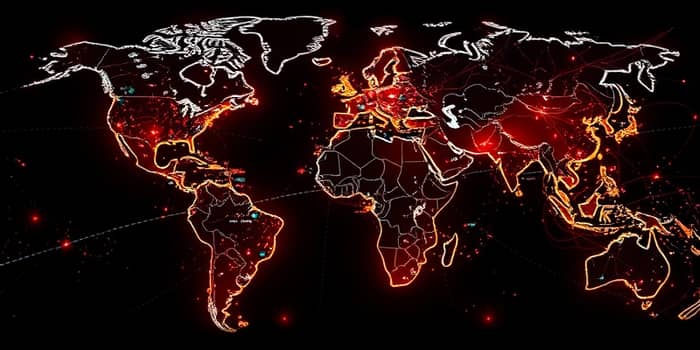
Capital flows lie at the heart of the global economic ecosystem. By facilitating the cross-border movement of financial assets, these flows allocate resources to projects, companies, and markets across continents. Understanding their mechanics and patterns is critical for policymakers, investors, and citizens alike. As we navigate an era of heightened uncertainty—marked by volatile markets, shifting monetary policies, and geopolitical tensions—the dynamics of capital flow become even more consequential. This article unravels the anatomy, drivers, and implications of these financial currents.
The Anatomy of Global Capital Flows
Capital flows comprise three fundamental categories: foreign direct investment, portfolio investment, and other investment vehicles. Each category reflects distinct investor motives, time horizons, and risk profiles. By distinguishing among them, one gains clarity on how funds traverse international borders and which economies stand to gain or lose from sudden shifts.
- Foreign direct investment (FDI): long-term investments where foreign entities acquire meaningful stakes in domestic companies, signaling confidence in local growth prospects.
- Portfolio investment: the purchase or sale of securities, such as stocks and bonds, often aimed at capturing interest rate or valuation differentials.
- Other investments: loans, deposits, trade credits, and remittances that can flow more swiftly but may also reverse quickly under stress.
Recent Trends Shaping the Landscape
Emerging markets (EMs) have experienced a roller-coaster of inflows and outflows in the 2024–2025 period. In Q1 2025, several EMs registered portfolio outflows in both equities and bonds as investors recalibrated risk amid tightening financial conditions. While bond inflows rebounded modestly in March, fresh outflows resumed in April.
Q4 2024 marked the first quarter since early 2020 with a sharply decline in non-resident inflows into EMs. India ended a six-quarter streak of portfolio gains, and countries like Malaysia and Thailand saw their largest outflows since Q1 2020. In contrast, Türkiye, Poland, Chile, and the Philippines maintained inflows, illustrating the uneven nature of capital allocation.
Developed economies have displayed robust bilateral investment corridors, particularly between the United States and Europe. After peaking at $213 billion of US direct investment in Europe in 2021, flows moderated in subsequent years as valuations and interest rate spreads shifted. European investors have diversified into international and Europe-focused equity funds, pouring €125 billion between January and July 2025, while trimming €13 billion from US-focused funds.
Real assets, particularly commercial real estate, are poised for a resurgence as central banks signal potential rate cuts. Analysts forecast transaction volumes to rise in 2025, driven by investor appetite for stable income streams. Meanwhile, short-term capital flows—such as bank lending and trade credits—display more sensitivity to policy shifts. In August 2025, private foreign investors made net purchases of $196.4 billion in US assets, while official institutions offloaded $15.1 billion, illustrating the diverging roles of private and public entities in global finance.
Structural Drivers: The Engines and Brakes
Several fundamental forces propel and restrain capital movements worldwide. Investors seek optimal yields adjusted for risk, while central banks and regulatory agencies shape incentives through policy levers. Understanding these forces explains the timing and scale of inflows or outflows.
- Relative economic performance: allocation responds to relative risk-adjusted expected returns rather than simple geographic diversification.
- Monetary policy divergence: lower interest rates in major economies have encouraged cross-border searches for yield.
- Financial market conditions: volatility spikes can trigger global financial conditions tighten abruptly, prompting sudden stops.
- Policy and regulatory environment: sanctions, capital controls, and tax rules materially alter capital incentives.
Geopolitical Shocks and Systemic Risks
History demonstrates that major shocks redirect capital flows in profound ways. The global financial crisis, the COVID-19 pandemic, and the Ukraine crisis each reshaped investor confidence, risk premiums, and the perceived safety of jurisdictions. In the post-pandemic era, Chinese capital inflows have decoupled from many EM peers, reflecting a mix of policy uncertainty, shifting supply chains, and strategic considerations.
Such events not only affect immediate capital patterns but can also leave lasting imprints on market structures and bilateral trust. For EMs, the risk of sudden stops—where inflows reverse sharply—remains high, demanding vigilant macroprudential oversight.
The Ripple Effect: Impact on Economies
Capital flows serve as a double-edged sword. Inflows can bolster investment, stimulate job creation, and support exchange rate stability. Conversely, abrupt outflows can deplete foreign reserves, amplify currency depreciation, and elevate borrowing costs. The interconnection of intricate network of monetary channels means that shocks in one region can reverberate globally, affecting credit availability and asset valuations elsewhere.
Moreover, remittances continue to underpin household income in many EMs, rising above historical averages and providing a stabilizing balance against more volatile portfolio flows.
Outlook for 2025–2026 and Policy Approaches
Looking ahead, most forecasts anticipate global growth of around 3.2 percent in 2025, supported by stabilizing borrowing costs and ongoing recovery in real estate markets. Yet, the high sensitivity to unexpected shocks underscores the need for calibrated policy responses.
- Open yet managed capital regimes: striking a balance between attracting investment and safeguarding stability.
- Macroprudential measures: deploying stress tests, reserve requirements, and liquidity buffers.
- Official reserve management: central banks smoothing volatility through strategic drawdowns or interventions.
- International coordination: aligning regulatory frameworks and information sharing to prevent regulatory arbitrage.
Quantitative Snapshot
The following table summarizes key quantitative highlights from recent data, offering a concise view of current capital flow dynamics.
Conclusion: Nurturing Resilient Financial Veins
The health of the global economy hinges on understanding and managing capital flows as we would the circulatory system of a living organism. While flows can nourish growth in some regions, they may drain resources from others in times of stress. Navigating this complex terrain requires both technical expertise and strategic foresight.
By combining robust data analysis, prudent policy frameworks, and international cooperation, stakeholders can ensure a durable capital environment that supports sustainable prosperity and shared resilience across nations.
References
- https://www.brookings.edu/articles/trends-in-global-capital-flows-to-emerging-markets/
- https://www.ici.org/viewpoints/25-cross-border-capital-flows
- https://www.jll.com/en-us/insights/market-outlook/global-capital
- https://www.iif.com/Products/Capital-Flows-Tracker
- https://unctad.org/publication/world-investment-report-2025
- https://home.treasury.gov/news/press-releases/sb0317
- https://www.imf.org/en/publications/weo/issues/2025/04/22/world-economic-outlook-april-2025
- https://www.trustintelligence.co.uk/investor/articles/strategy-investor-following-the-flow-where-global-capital-is-looking-next-retail-nov-2025