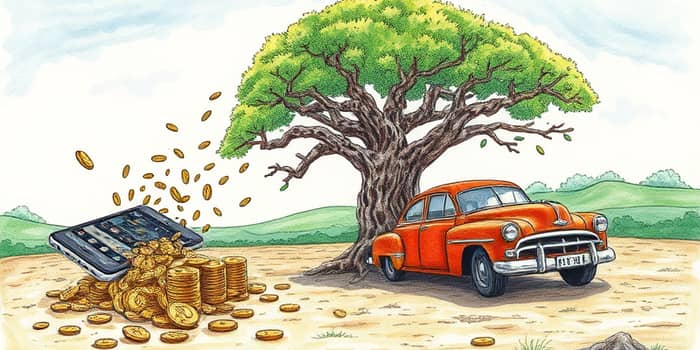
Understanding how your purchases evolve in value over time can transform your approach to investing and asset management. Depreciation is a powerful accounting tool, but it also reflects an undeniable reality: some assets simply lose value over time. By recognizing which purchases will erode your wealth, you can make smarter decisions and preserve and grow your wealth for the future.
Understanding Depreciation and Its Impact
Depreciation applies to tangible or intangible property that lose value due to wear, obsolescence, or usage. In accounting, it allows businesses to spread the cost of an investment across its useful life, matching expense with revenue generation.
The cost basis of a depreciating asset includes its purchase price plus any related taxes, freight, installation, and testing fees. Over time, the business deducts a portion of this basis as an expense, reducing taxable income. While this provides a tax advantage, it also underscores that the asset will never recoup its original cost in full.
Common Depreciating Assets and Their Pitfalls
Some assets decline so rapidly that the tax benefits cannot offset their economic loss. Understanding these categories helps consumers avoid unwise purchases.
- Rapidly Depreciating Tech: Computers, smartphones, and electronics often follow a 5-year MACRS schedule but lose most of their value within 1–2 years.
- Vehicles and Transportation: New cars and trucks depreciate up to 20% the moment they leave the lot, following an accelerated schedule yet rarely retaining resale value.
- Moderately Depreciating Equipment: Machinery, furniture, and office fixtures spread over 7–10 years but incur rising maintenance costs as they age.
Investing heavily in these categories without planning can trap capital in assets that never match your original outlay.
Strategies to Preserve Wealth
Rather than locking funds into rapidly depreciating items, consider assets that retain or grow in value. These are often less visible on a balance sheet but integral to long-term financial stability foundation.
- Land and Real Estate: Land has an unlimited useful life and often appreciates. Rental properties can also generate steady income.
- Collectibles and Art: Rare coins, art, and memorabilia can increase in value, though liquidity varies.
- Financial Investments: Stocks, bonds, and mutual funds offer market-based growth rather than steady depreciation schedules.
By shifting capital into these stable holdings, you avoid the true economic loss of assets that decline purely through usage or obsolescence.
Choosing the Right Depreciation Method
When business needs or tax strategies compel you to purchase depreciating assets, selecting the optimal method can improve cash flow. Each method affects expense timing, not total cost.
Straight-line spreads cost evenly, ideal for assets with predictable usage. Double declining balance accelerates deductions, beneficial for items losing value quickly. MACRS follows IRS tables, guaranteeing maximum early-year write-offs under U.S. tax law.
Balancing Tax Advantages and Economic Reality
While accelerated methods lower taxable income more swiftly, they do not enhance the asset’s resale value. For instance, a $100,000 computer might generate a $40,000 deduction in year one, but its market worth could plummet below $20,000 by year three.
Always weigh tax benefits against actual depreciation trends. If an asset’s market value declines faster than your deductions, you may face a gap between book value and sale proceeds, reducing overall returns.
Practical Tips for Smart Asset Decisions
Before making any significant purchase, follow these guidelines to minimize regret and financial loss:
- Calculate the systematic cost allocation for accounting and compare it to projected market value decline.
- Assess useful life versus obsolescence risk; high-tech items often become outdated within months.
- Include all cost basis components—sales tax, shipping, installation—to understand true investment.
- Prioritize assets with inflation-resistant value or income-generating potential.
- Use budgeting tools or software to track depreciation schedules alongside actual market pricing.
Conclusion: Investing with Intention
Every dollar you allocate to an asset carries an opportunity cost. By recognizing which items will steadily lose value and which can preserve or grow your holdings, you take control of your financial destiny.
Whether you’re a small business owner, an investor, or a consumer planning personal purchases, thoughtful analysis will guide you away from pitfalls and toward assets that support your goals. Embrace depreciation as both an accounting necessity and a signal—one that reminds you to invest with intention and secure a prosperous future.
References
- https://www.thehartford.com/business-insurance/strategy/depreciating-assets/what-can-be-depreciated
- https://visuallease.com/how-to-use-the-4-methods-of-calculating-depreciation-under-us-gaap/
- https://accountants.sva.com/biz-tips/5-depreciation-methods-business-owners-need-to-know
- https://www.indeed.com/career-advice/career-development/depreciation-methods
- https://www.assetpanda.com/resource-center/blog/what-is-depreciation/
- https://learn.microsoft.com/en-us/dynamics365/business-central/fa-depreciation-methods
- https://www.sunflowerbank.com/about-us/resource-articles/depreciation/
- https://help.deltek.com/Product/Vantagepoint/5.5/con_Asset_Depreciation_Methods.html
- https://www.netsuite.com/portal/resource/articles/financial-management/depreciation.shtml
- https://www.thomsonreuters.com/en-us/help/ultratax-cs/depreciation/depreciation-calculation-methods.html
- https://www.ctas.tennessee.edu/eli/depreciation-methods-and-rates
- https://www.youtube.com/watch?v=ndMPuMRusEs
- https://www.accountsportal.com/blog/assets-depreciation-explained
- https://corporatefinanceinstitute.com/resources/accounting/types-depreciation-methods/
- https://quickbooks.intuit.com/ca/resources/midsize-business/fixed-assets-depreciation/