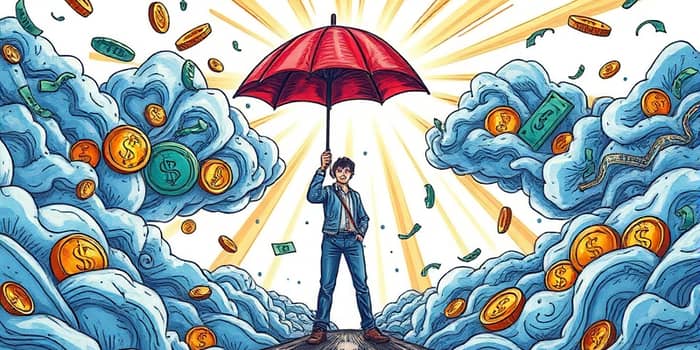
As global markets waver and household budgets tighten, the capacity to weather financial turbulence has never been more crucial. From individual psychology to community networks and macroeconomic policies, financial grit bridges multiple domains of resilience.
By embracing practical strategies and cultivating a resilient mindset, anyone can prepare for, cope with, and recover from the next unexpected shock—whether it arrives as job loss, inflation spikes, or a broader recession.
The New Economic Reality
Entering 2025, many economies face persistent inflation and economic volatility. Elevated interest rates, supply-chain disruptions, and climate-related events continue to pressure household finances.
Unstable job markets and rising living costs make every paycheck feel precarious. Policymakers from the IMF to the World Bank emphasize repairing public finances, fostering job creation, and integrating climate adaptation to bolster systemic resilience.
At the same time, health emergencies and extreme weather threaten productivity worldwide, underscoring the need for unstable employment conditions and income to be met with robust personal planning.
Four Pillars of Financial Resilience
Financial resilience is a multidimensional construct of financial resilience that rests on four core pillars. Together, they reduce vulnerability and pave the way to long-term stability.
Households that strengthen each pillar see reduced financial fragility and stress, higher life satisfaction, and an empowered outlook on future opportunities.
Strategies for Personal Financial Grit
Building financial grit starts with deliberate, consistent actions. Below are four practical strategies that can transform uncertainty into opportunity.
- Budgeting under uncertainty: Itemize expenses and prioritize essentials like housing and healthcare.
- Building and protecting an emergency fund: Aim for 3–6 months of essential expenses in liquid savings.
- Debt management and smart borrowing: Tackle high-interest debt first and explore refinancing options.
- Income resilience: Develop diversified income streams and side hustles to reduce reliance on a single source.
Start by automating transfers to a separate savings account and reviewing credit statements monthly. Gradual progress builds confidence, reinforcing a self-control and future-oriented planning mindset.
Over time, small victories—like paying down a credit card or meeting a savings milestone—foster the psychological grit needed to stay the course during tougher periods.
Empowering Small Businesses
Small enterprises form the backbone of many communities. By embedding resilience into operations, business owners can navigate downturns and emerge stronger.
- Maintain cash reserves equal to 3–6 months of operating expenses to cover unexpected costs.
- Adopt flexible business models that allow rapid pivoting when demand shifts.
- Leverage digital tools and AI to streamline costs and identify growth opportunities.
- Build partnerships with suppliers, customers, and other local businesses to share resources.
Collaboration and proactive financial planning can transform a reactive stance into a strategic advantage, aligning with the goal of dynamic private sectors and jobs.
Building Social and Community Support
No one thrives in isolation. Informal networks—family, friends, and community groups—offer vital lifelines during crises. Mutual aid initiatives and local cooperatives often fill gaps left by formal systems.
Formalizing these networks through policy can amplify their impact. Governments and nonprofits can support community-based savings groups, microfinance cooperatives, and mutual aid groups and networks to ensure rapid, neighbor-to-neighbor assistance.
The Road Ahead: Cultivating Long-Term Resilience
Financial grit is not a one-time achievement but a journey. Embracing continuous learning, adapting to new tools, and revisiting financial plans regularly are essential steps.
As you strengthen your economic resources, expand knowledge, and deepen social ties, remember that resilience grows over time. Each deliberate choice builds a foundation for future wellbeing and security.
By committing to a lifelong commitment to financial well-being, you can face whatever economic storms arise with confidence, purpose, and a community of support.
References
- https://pmc.ncbi.nlm.nih.gov/articles/PMC12403627/
- https://www.uschamberfoundation.org/disasters/the-resilience-reset-building-resilience-conference-2025
- https://denverbusinesscoach.com/how-small-businesses-can-build-financial-resilience-in-uncertain-times/
- https://www.abacum.ai/blog/navigating-measures-for-economic-resilience-and-sustainable-growth
- https://ascend.bank/news/resilient-financial-strategies-how-to-manage-your-budget-amid-economic-uncertainty/
- https://www.imf.org/en/news/articles/2025/10/17/sp101725-resilience-in-a-world-of-uncertainty
- https://www.hopecu.org/articles/building-financial-resilience-how-to-navigate-financial-challenges/
- https://www.lga.cpa/insights/blog/2025-is-your-business-ready-to-thrive/
- https://www.smacna.org/news/smacnews/issue-archive/issue/articles/smacnews-may-june-2025/financial-resilience--strengthen-your-scenario-planning-in-2025
- https://www.worldbank.org/en/news/immersive-story/2025/12/16/2025-resilient-economies-smart-development-more-jobs
- https://www.breadfinancial.com/en/financial-education/responsible-saving/building-financial-resilience.html
- https://belkcollege.charlotte.edu/2025/10/03/communities-must-build-resilience-to-survive-economic-shocks-charlotte-and-irish-experts-say/
- https://www.nerdwallet.com/finance/studies/data-resilience-economy
- https://www.clarmondial.com/reflections-wef-2025/
- https://www.financialexecutives.org/About-FEI/For-the-Press/2025/In-2025-Financial-Executives-Will-Focus-on-Initiat.aspx
- https://www.paytronix.com/resources/e-books/economic-resilience-guide
- https://meetmarigold.com/resources/blog/economic-resilience-marketing-strategy