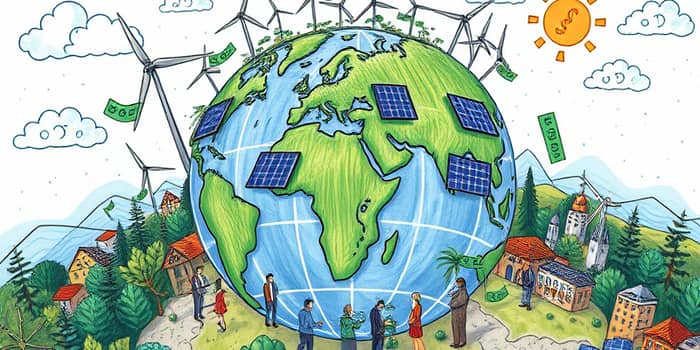
Green finance has emerged as a cornerstone for driving global sustainability, channeling capital toward projects that combat climate change and protect our planet. As governments, businesses, and investors recognize the urgent need for environmental action, understanding the dynamics of green finance is essential to harness its full potential.
Understanding Green Finance
At its core, green finance involves funding environmentally friendly projects and technologies such as renewable energy, energy efficiency upgrades, sustainable transport systems, and climate-resilient infrastructure. While often used interchangeably with sustainable finance, green finance specifically targets environmental outcomes. In contrast, sustainable finance integrates environmental, social, governance factors into investment decisions for broader impact, including social and governance objectives.
This distinction shapes the design of financial instruments, regulatory policies, and investor strategies, ensuring capital flows to high-impact environmental projects that would otherwise struggle to secure funding through conventional channels.
Market Size and Growth Projections
The global green finance market was valued at $4.18 trillion in 2023 and is expected to skyrocket to $28.71 trillion by 2033, growing at a compound annual growth rate (CAGR) of 21.25%. Meanwhile, the broader sustainable finance market reached $5.87 trillion in 2024 and could exceed $38.19 trillion by 2034 at nearly 20% CAGR. Within this expansion:
- Shift to low-carbon economy
- Regulatory emphasis on sustainability
- Investor demand for ESG integration
- Public awareness of climate risks
These growth drivers catalyze new investment avenues and fuel record issuances in green bonds, sustainability-linked loans, and equity investments focused on environmental technologies.
Regional Leadership and Key Players
North America leads innovation in green finance, driven by stringent regulations and high consumer demand for sustainable solutions. Europe boasts the largest sustainable finance market, underpinned by the EU Sustainable Finance Action Plan and comprehensive green taxonomies. The Asia-Pacific region, however, is catching up rapidly, with groundbreaking projects that include clean power for data centres and rapid bond issuance to fund environmental infrastructure.
Major banks, asset managers, and dedicated green funds—such as the top 20 green finance companies identified by industry reports—are actively channeling capital into transformative projects worldwide, creating a competitive yet collaborative landscape.
Financial Instruments and Evolving Trends
Innovative instruments lie at the heart of green finance’s success. The green bond market alone reached $2.9 trillion in outstanding volume in Q1 2025, representing nearly 10% of global bond issuance by volume. Other rapidly expanding instruments include sustainability-linked loans and climate funds adopted by pension funds and asset managers seeking measurable environmental outcomes.
- Green bonds
- Sustainability-linked loans
- Green equity investments
- Carbon funds
- Climate-resilient infrastructure finance
Each instrument carries unique structures and reporting requirements, aligning financial returns with environmental performance metrics and fostering accountability across the investment lifecycle.
Policy and Regulatory Frameworks
Governments and international bodies have crafted policies to standardize definitions, reduce greenwashing, and clarify disclosure expectations. The EU Sustainable Finance Action Plan, complemented by national taxonomies, sets rigorous criteria for eligible projects and enforces transparent reporting. Meanwhile, UN and OECD guidelines promote public-private alignment, reinforcing commitments under the Paris Agreement and national climate pledges.
Such policy frameworks drive consistent market standards, reduce investor uncertainty, and encourage cross-border collaboration on climate finance initiatives.
Economic and Structural Benefits
Empirical studies across multiple countries reveal positive links between green finance and economic growth, particularly in regions with robust regulation and a skilled workforce. By redirecting capital to high-growth, low-carbon sectors, green finance spurs productivity gains and innovation in renewables, clean technology, and sustainable infrastructure.
- Renewable energy and energy efficiency
- Climate-resilient infrastructure
- Circular economy and waste management
- Pollution prevention and biodiversity conservation
As green finance surpasses a critical threshold, critical mass benefits accelerate due to scale effects, amplifying job creation, supply chain resilience, and long-term economic stability.
Challenges and Funding Gaps
Despite rapid growth, the green finance market remains only a fraction of the capital required to meet global climate and development goals. Persistent challenges include:
- Inconsistent regulatory environments across jurisdictions, complicating cross-border investment.
- A lack of standardized definitions, heightening greenwashing risks.
- Insufficient pipelines of investment-ready projects, notably in developing economies.
- Market volatility during global downturns, testing resilience of green assets.
Bridging these gaps demands enhanced collaboration between public institutions, private investors, and local communities to develop robust project pipelines and harmonize regulatory frameworks.
Future Outlook and Innovations
The next decade promises a transition from pledges to tangible investment outcomes. As international standards mature and disclosure frameworks evolve, market participants will increasingly deploy capital toward sustainable infrastructure, nature-based solutions, and climate adaptation technologies. Breakthroughs in digital finance—such as blockchain-enabled green bonds and tokenized carbon credits—are poised to unlock new funding sources and improve transparency.
By nurturing innovation, strengthening policy cohesion, and expanding access to finance in emerging markets, green finance can fully realize its role in powering a sustainable global economy—ensuring prosperity for current and future generations.
References
- https://acr-journal.com/article/green-finance-as-a-catalyst-transforming-sustainability-into-economic-competitiveness-1685/
- https://www.sphericalinsights.com/blogs/top-20-green-finance-companies-in-global-2025-statistics-view-by-spherical-insights-consulting
- https://www.charteredbanker.com/resource_listing/cpdresources/what-is-green-and-sustainable-finance.html
- https://www.grandviewresearch.com/industry-analysis/sustainable-finance-market-report
- https://www.weforum.org/stories/2025/09/sustainable-finance-in-2025-why-investors-can-t-afford-to-look-away/
- https://www.gminsights.com/industry-analysis/sustainable-finance-market
- https://www.un-page.org/news/exploring-sustainable-finance-with-page/
- https://www.precedenceresearch.com/sustainable-finance-market
- https://www.oecd.org/en/publications/green-finance-and-investment_24090344.html
- https://finance.ec.europa.eu/sustainable-finance/overview-sustainable-finance_en
- https://think.ing.com/articles/global-sustainable-finance-2025-mixed-results-highlight-regional-differences/
- https://www.moodys.com/web/en/us/insights/credit-risk/outlooks/esg-sustainable-finance-2025.html