Behavioral economics has revolutionized public policy by revealing how subtle psychological forces shape human decisions. This paradigm shift challenges the traditional assumption of fully rational actors, demonstrating that policy design can systematically improve outcomes by aligning interventions with how people actually think and behave.
Over the past decade, governments worldwide have embraced behaviorally informed strategies to tackle complex challenges, from climate action to financial inclusion. By integrating insights from psychology, neuroscience, and data science, policymakers have unlocked new pathways for promoting citizen welfare while respecting individual autonomy.
Understanding Core Concepts
The field of behavioral economics bridges economics and psychology to account for deviations from rational decision-making. Individuals often rely on mental shortcuts or heuristics that lead to predictable biases, such as present bias, overconfidence, and loss aversion. Recognizing these patterns allows the creation of interventions that reduce friction, shape default options, and leverage social influence.
For instance, cognitive biases and heuristics explain why people procrastinate on saving for retirement or fail to adhere to medication schedules. Tools like nudges—gentle prompts or changes in how choices are framed—can guide behavior without restricting freedom. Frameworks such as MINDSPACE, COM-B, EAST, and BASIC help policymakers systematically design, test, and scale these interventions.
Rigorous evaluation through randomized control trials often reveals that low-cost interventions tested via randomized trials can achieve outsized benefits compared to traditional regulations or incentives. These trials measure impacts objectively, ensuring that only evidence-backed strategies are implemented at scale.
Global Rise of Behavioral Insights Teams
The first formal adoption of behavioral insights in government occurred in 2010, when the UK Cabinet Office established the Behavioural Insights Team (BIT). Tasked with applying behavioral methods to public services, the UK BIT achieved significant cost savings in areas like tax compliance, organ donation, and energy efficiency.
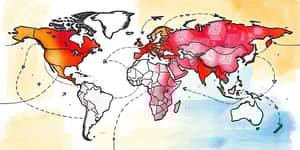
Inspired by the UK’s success, the United States followed in 2014, creating the White House Social and Behavioral Sciences Team. This unit collaborated across agencies, from the USDA promoting nutritional choices to the Treasury optimizing retirement plan enrollment. Canada formed both federal and provincial teams to improve welfare provision and tax collection, while countries such as Australia, the Netherlands, Ireland, and Singapore established their own BITs. Today, dozens of teams operate globally, each tailoring insights to local contexts.
These efforts are underpinned by interdisciplinary collaboration with AI and big data, enabling real-time analysis of policy impacts and the customization of interventions based on granular behavioral data.
Key Applications Across Policy Domains
Behavioral economics tools have delivered impressive results across six major domains: health, retirement and savings, environment and climate, tax compliance, social welfare and employment, and education and criminal justice. The following table highlights selected examples:
Policymakers employ a variety of techniques to influence behavior:
- Defaults that harness inertia to boost positive outcomes
- Social norm messages that leverage peer influence
- Framing effects emphasizing potential losses over gains
- Simplification to lower cognitive barriers and effort
When combined judiciously, these methods form behaviorally informed policymaking frameworks like MINDSPACE EAST that can be adapted to diverse cultural and economic settings.
Real-World Case Studies and Measured Outcomes
India’s landmark public health initiative, the Swachh Bharat Mission, deployed a mix of social norm messaging, public pledges, and subsidy shifts to nearly eliminate open defecation in participating districts. A randomized trial comparison showed a substantial increase in sanitation facility use and community engagement, with reported declines in waterborne diseases.
The Beti Bachao Beti Padhao campaign used targeted media and community events to tackle deep-seated biases against girls, resulting in improved school enrollment rates and enhanced well-being indicators across multiple states. Similarly, India’s LPG subsidy reforms (PAHAL and Ujjwala) combined direct benefit transfers with enrollment simplification, leading to rapid household adoption that outpaced earlier subsidy schemes.
In the UK, BIT experiments such as simplified tax reminder letters achieved up to a 15% increase in on-time payments. The US Social and Behavioral Sciences Team’s interventions in mortgage disclosures and retirement plan enrollment documented participation boosts of 10–18 percentage points. These figures underscore the power of personalized nudges in real-time contexts to drive measurable, cost-effective policy gains.
Behavioral Development Economics and Global South
In low- and middle-income countries, behavioral insights have unlocked new approaches to poverty reduction and service delivery. The World Bank’s behavioral development economics agenda emphasizes psychology-driven channels for improving trade facilitation, reducing policy uncertainty, and enhancing social protection uptake. In Kenya, traffic safety trials using visual cues and emotive messaging cut accident rates significantly, while in Mali, carefully designed civic education highlighted the importance of cultural tailoring to avoid unintended effects on political engagement. These examples illustrate the potential for behavioral development economics for poverty alleviation across diverse environments.
Future Directions and Ethical Considerations
As behavioral economics enters its next phase, the integration of machine learning, big data analytics, and digital platforms promises more adaptive, personalized nudges. Real-time analytics could tailor interventions to individual contexts, improving effectiveness in areas like vaccination drives or energy conservation. There is also a call for deeper interdisciplinary research combining sociology, neuroscience, and economics to understand cultural nuances and ensure policies are inclusive.
Yet, with greater capabilities come heightened ethical responsibilities. Policymakers must maintain an ethical balance between autonomy and paternalism, ensuring transparency, data privacy, and informed consent. Unintended consequences, such as the backlash against civic campaigns in Mali, underscore the need for careful piloting and ongoing evaluation.
Building institutional capacity remains critical. Governments should invest in training behavioral specialists, standardizing methods for impact assessment, and fostering cross-border knowledge exchange. A global behavioral agenda can address pressing challenges, from poverty alleviation to climate resilience, by combining traditional policy tools with psychology-driven insights.
In conclusion, behavioral economics offers a transformative lens for reimagining public policy. By embracing subtle, evidence-based interventions that align with human psychology rather than opposing it, governments can enhance social welfare in an efficient, humane manner. The journey ahead will require innovation, collaboration, and vigilance to ensure that behaviorally informed policies serve the public interest with integrity and effectiveness.
References
- http://www.aeaweb.org/forum/3697/behavioral-economics-policy-impact-future-directions-report
- https://www.snoqap.com/posts/2024/8/16/behavioral-economics-in-policy-making
- https://www.ispp.org.in/how-behavioural-economics-can-improve-public-policy-outcomes-real-world-applications-insights/
- https://www.intereconomics.eu/contents/year/2018/number/1/article/behavioral-economics-and-public-opinion.html
- https://works.swarthmore.edu/fac-economics/518/
- https://www.cambridge.org/core/books/behavioural-incentive-design-for-health-policy/policy-applications-from-a-global-perspective/5B3C21B610D39B36D9E73E3C56369A5C
- https://www.brookings.edu/articles/bringing-behavioral-economics-to-development/
- https://pmc.ncbi.nlm.nih.gov/articles/PMC4871624/
- https://openknowledge.worldbank.org/entities/publication/73260ffa-59f6-538a-a250-96af2dc9a1e7
- https://publications.iadb.org/en/10-lessons-about-behavioral-economics-policy-making-social-sector
- https://www.nationalacademies.org/projects/DBASSE-BBCSS-20-01
- https://www.nber.org/papers/w34753