As the world economy settles into a “new normal,” leaders and businesses must chart courses that embrace uncertainty while seizing emerging opportunities. Global growth, forecast at 2.6–3.3%, remains below pre-pandemic average of 3.2%, challenging traditional assumptions. This article offers a roadmap for adaptation, resilience, and sustainable expansion.
Understanding the “New Normal” in Growth
Multiple organizations project global GDP growth between 2.4% and 3.3% in 2026. While projections vary—IMF at 3.3% and Coface at 2.4–2.5%—a consensus emerges that the post-pandemic era demands fresh strategies.
Growth is tempered by lingering supply chain bottlenecks, rising debt burdens, and geopolitical tensions. Yet, pockets of dynamism in technology investment and regional trade offer a beacon of hope.
- Record global trade expansion, up 7% in 2025.
- Inflation easing to an expected 3.1% in 2026.
- new normal economic environment reshaping policy tools.
- Regional divergence creating tailored growth paths.
Regional Divergence and Local Strategies
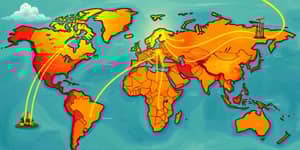
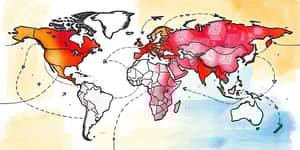
Economic momentum diverges sharply across regions. The United States eyes 1.5–2.1% growth anchored in AI and consumer resilience, while China targets 4.6% with policy support against overcapacity. The European Union’s modest 0.9–1.3% projection reflects export headwinds and domestic belt-tightening.
Emerging markets in South Asia and East Asia lead with 5.6% and 4.4% respectively, driven by consumption, public spending, and front-loaded exports. Africa’s 4.0% growth faces climate and debt risks, while Latin America’s 2.3% reflects gradual recovery.
Harnessing Technology for Resilience
Technology emerges as a core resilience factor. AI-driven investment in data centers, semiconductors, and power generation sustains activity despite trade barriers. Firms that embrace digital and green transitions will find buffers against volatility.
Yet rapid valuation changes pose financial stability concerns. Policymakers must monitor asset bubbles, while companies should align innovation spending with realistic return horizons.
Navigating Risks and Building Resilience
Uncertainties span from tariff escalation to climate shocks. Business leaders and governments must anticipate and mitigate these shocks through diversification and strategic planning.
- Escalation of geopolitical tensions affecting trade flows.
- Protectionism surge across major economies.
- Asset bubble risks from stretched valuations.
- Uneven inflation and supply bottlenecks.
- diversify supply chain partnerships to reduce exposure.
Practical Steps for Businesses and Policymakers
Translating insight into action demands targeted interventions. Consider the following strategies to thrive amid shifting conditions:
- Prioritize investment in digital infrastructure and skills.
- strengthen regional trade networks through new alliances.
- Implement adaptive fiscal frameworks balancing stimulus and debt.
- Enhance supply chain transparency with advanced analytics.
- Develop scenario plans for tariff and energy price shocks.
- balance stimulus with sustainable debt management to safeguard fiscal space.
Conclusion: Steering Toward Opportunity
The coming years will test the agility of economies, businesses, and communities. By recognizing the contours of a new global growth paradigm, leveraging technology, and building robust risk management frameworks, leaders can navigate uncertainty and unlock durable progress.
This era of modest yet steady expansion invites creativity: reimagining supply chains, forging green partnerships, and championing inclusive policies. Those who act decisively today will shape the economic currents of tomorrow, transforming challenges into lasting opportunity.
References
- https://unctad.org/news/10-trends-shaping-global-trade-2026
- https://desapublications.un.org/publications/world-economic-situation-and-prospects-2026
- https://www.coface.com/news-economy-and-insights/economic-outlook-for-2026-preparing-european-businesses-for-turbulence
- https://www.pwc.com/us/en/about-us/newsroom/press-releases/annual-outlook-2026.html
- https://www.imf.org/en/publications/weo/issues/2026/01/19/world-economic-outlook-update-january-2026
- https://www.atlanticcouncil.org/dispatches/five-trends-to-watch-in-the-global-economy-in-2026/
- https://www.spglobal.com/market-intelligence/en/news-insights/research/2026/01/global-economic-outlook-january-2026
- https://www.weforum.org/meetings/world-economic-forum-annual-meeting-2026/sessions/global-economic-outlook-af4fed3639/
- https://www.oxfordeconomics.com/key-themes-2026/
- https://www.worldbank.org/en/publication/global-economic-prospects