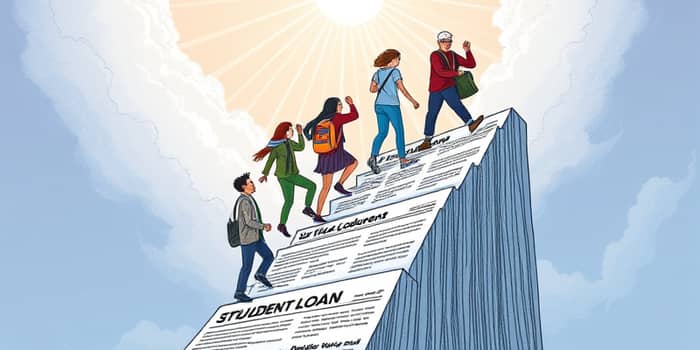
Student loan debt in the U.S. has surged to unprecedented heights, leaving borrowers across generations seeking clarity and relief. This guide offers a comprehensive roadmap to navigate rising balances and achieve financial freedom.
Armed with data from late 2025, we dive deep into the ever-changing loan landscape, proven repayment strategies, and actionable steps designed to help you take control of your financial future.
Overview: The U.S. Student Debt Crisis in 2025
As of late 2025, the total outstanding student loan debt in the United States has reached $1.81 trillion, spread across federal and private programs. Federal borrowers owe approximately $1.67 trillion through 42.3 million active loans, while private lenders still hold $144.86 billion for a smaller pool of borrowers.
Average debt per borrower now stands between $39,375 and $40,800, with median balances of $20,000–$25,000. Monthly payments for bachelor’s graduates average $336, creating a long-term financial commitment that shapes life choices for millions.
Who’s Borrowing and How Much
Borrowers span all age groups: more than 52% are over 35, and 20% are above 50 years old, highlighting the growing demographic of mid-career and near-retirement borrowers still carrying educational debt.
In fact, 3.6 million individuals owe over $100,000, intensifying the burden on those balancing mortgages, family obligations, and retirement planning.
Understanding Your Loans
Student loans split into federal and private categories, each with distinct terms, interest rates, and flexibility. Federal loans dominate the market, offering multiple repayment plans and forgiveness options, while private loans often feature stricter terms and fewer relief programs.
Below is a breakdown of federal Direct Loans and related programs:
Within these categories, subsidized and unsubsidized Stafford loans account for nearly $912 billion, while PLUS loans add another $232.3 billion. Private loans, totaling $144.86 billion, remain a smaller share but often carry higher interest rates.
Repayment Strategies
Choosing the optimal repayment plan can dramatically alter your financial trajectory. Federal borrowers can select from:
- Standard Plan (10 years): Fixed payments, faster payoff.
- Graduated Plan: Lower initial payments that increase over time.
- Extended Plan (up to 25–30 years): Reduced monthly payments.
- Income-Driven Repayment (IDR): PAYE, IBR, SAVE, or ICR, with payments tied to discretionary income and potential forgiveness after 20–25 years.
Tips to Pay Off Faster
Accelerating repayment not only shortens your loan term but also reduces total interest costs. Consider the following tactics:
First, make payments more frequently—biweekly payments effectively add an extra full payment each year, trimming interest accrual. Second, apply windfalls such as tax refunds, bonuses, or gifts directly to your principal balance to see immediate progress. Third, refinance private or federal loans with a private lender if you qualify for a lower rate, but weigh the loss of federal protections.
Adopting a budget with clear categories for essentials, discretionary spending, and accelerated loan payments fosters accountability and helps you stay on track for key milestones.
Trouble Paying?
Borrowers facing temporary hardships can explore deferment or forbearance, though interest may continue accruing and capitalize into the principal. To avoid default, maintain communication with your servicer and consider switching repayment plans if your income changes.
If you miss payments, federal loans have an 11.3% delinquency rate, and private loans hover at 1.6% delinquency for 90+ days. Early intervention is critical to prevent the long-term credit damage and wage garnishment associated with default.
The Path to Forgiveness
Public Service Loan Forgiveness (PSLF) and Income-Driven Repayment forgiveness represent rays of hope for qualifying borrowers. Under PSLF, borrowers in government or nonprofit roles may see balances erased after 120 qualifying payments.
Recent data shows a median loan forgiveness of $20,000, with some borrowers receiving more than $99,000. The SAVE plan alone serves 7.7 million borrowers with $433 billion in outstanding debt, offering structured relief and eventual forgiveness.
Impact on Life Decisions
Student debt influences major life choices—from delaying home purchases to postponing retirement savings. With average balances ranging from $36,886 in Wyoming to $69,972 in Washington D.C., regional disparities further shape financial outlooks.
Carrying debt into your thirties and beyond can elevate stress and limit career flexibility, making proactive management and strategic repayment indispensable.
Policy Updates and What’s Next
In late 2025, evolving policies around IDR adjustments, judicial rulings on forgiveness programs, and congressional debates continue to reshape borrower options. Staying informed through reliable federal resources ensures you can pivot quickly when new relief measures emerge.
Resources for Borrowers
- Federal Student Aid: Tools for comparing plans and simulating payments.
- Consumer Finance Sites: Budgeting guides, loan calculators, and negotiation tips.
- Nonprofit Counselors: Free or low-cost financial coaching to map out personalized repayment paths.
By leveraging the right mix of strategies—choosing the ideal repayment plan, accelerating payments, and tapping into forgiveness programs—you can transform overwhelming student debt into a conquered obstacle.
Embrace these tactics, stay vigilant about policy shifts, and persist with confidence. Your journey to financial freedom starts now.
References
- https://www.lendingtree.com/student/student-loan-debt-statistics/
- https://www.bairdwealth.com/insights/wealth-management-perspectives/2020/04/the-smart-way-to-pay-off-student-loans/
- https://www.bestcolleges.com/research/average-student-loan-debt/
- https://www.nerdwallet.com/student-loans/learn/pay-off-student-loans-fast
- https://educationdata.org/student-loan-debt-statistics
- https://landmarkcu.com/blog/pay-off-student-loans-faster/
- https://www.federalreserve.gov/publications/2025-economic-well-being-of-us-households-in-2024-higher-education-and-student-loans.htm
- https://www.consumerfinance.gov/paying-for-college/repay-student-debt/student-loan-debt-tips/
- https://educationdata.org/average-student-loan-debt
- https://studentaid.gov/loan-simulator/repayment/wizard/repayment-goals/target-goal
- https://www.newyorkfed.org/newsevents/news/research/2025/20251105
- https://studentaid.gov/manage-loans/lower-payments
- https://www.winssolutions.org/us-student-loan-statistics-2025/
- https://www.edcapny.org/resources-for-borrowers/student-loan-repayment-strategies-plans/
- https://www.credible.com/refinance-student-loans/average-student-debt
- https://www.salliemae.com/blog/debt-snowball-vs-avalanche/