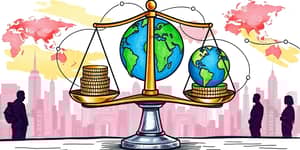
Imagine steering a small boat down a powerful, ever-changing river. Currents shift without warning, obstacles rise, yet those at the helm who observe, adjust and learn find the path forward. This image captures the essence of an adaptive economy, one that treats markets and societies as dynamic, evolutionary processes rather than fixed machinery.
In today’s hyper-connected world filled with uncertainty, we need frameworks that emphasize resilience, flexibility and intentional shaping of global ties. This article explores how individuals, businesses and governments can build agility to face challenges like climate change, inequality and systemic risks.
The Dual Edge of Globalization
Globalization has delivered unprecedented prosperity, cross-border cooperation and innovation. Yet it also magnifies vulnerabilities. A disruption in one region can reverberate around the world within hours or days. Recognizing this dual nature is the first step toward steering global flows toward sustainability and equity.
Core Principles of Adaptive Economics
At the heart of an adaptive economy lie three guiding notions that reshape how we craft policy, conduct business and make personal choices:
- Embrace continual innovation and flexibility to adjust swiftly to technological or environmental shifts.
- Acknowledge shifting centers of power by engaging diverse voices in decision-making fora.
- Foster broad public support through transparent dialogue and shared benefits.
These principles run counter to grand, top-down blueprints. Instead, they lean on iterative learning, transparent feedback loops and decentralized networks that detect emerging issues early.
Strategies for Building Agility
Governments, companies and citizens each play a role. By weaving resilience into every layer of society, we can transform shocks into opportunities for growth and inclusion.
- Invest in education and lifelong training programs to empower workers facing automation and green transitions.
- Diversify supply chains and promote localized production hubs to reduce dependency on distant suppliers.
- Implement environmental and social standards that align corporate success with community well-being.
- Support small and medium enterprises (SMEs) as engines of innovation and job creation.
- Adopt economic instruments—tax incentives, research grants and carbon pricing—that reward adaptive practices.
By blending centralized coordination with grassroots initiatives, this blended approach helps capture the agility of local solutions without sacrificing the advantages of global collaboration.
Learning from Experience: Historical Case Studies
The United States offers a striking example of adaptive economic diplomacy. In the 1970s, shifting from fixed exchange rates to floating currency regimes gave markets room to absorb oil shocks and financial volatility. In the 1980s, G-7 gatherings coordinated macro-economic policies, showcasing how collective action can stabilize the global system.
During the 2008 financial crisis, the G-20 under British leadership catalyzed a rapid, united response. This flexible governance model contrasted sharply with slower, more insular approaches of the past. On the other side of the spectrum, Tanzania’s reliance on commodity exports highlighted the need for industry diversification and skill development to avoid boom-and-bust cycles.
Envisioning Tomorrow: Adaptive Metrics and Growth
Traditional GDP figures capture output but miss nuances of environmental health, social equity and long-term resilience. New metrics—ecological footprints, well-being indices and stress-test scores—offer a richer picture of progress. By tracking these indicators, policymakers can better anticipate vulnerabilities and prioritize investments that yield both economic and ecological dividends.
Complex systems thinking and network analysis reveal how local innovations spread across webs of trade and communication. Mapping these connections helps design interventions that strengthen weak links, distribute risk and maintain cultural diversity.
Taking the Helm of Change
Ultimately, the shift toward an adaptive economy depends on action at every level.
As consumers, choosing locally sourced goods or supporting fair-trade initiatives contributes to strong, resilient communities. As business leaders, embedding circular economy principles and transparent reporting sends a powerful signal across your industry.
Citizens can engage with policymakers, advocating for well-rounded metrics and inclusive governance structures. Internationally, promoting polycentric cooperation—where cities, regions and nations collaborate on shared challenges—ensures that no one acts alone.
By embracing uncertainty as a driver of creativity rather than a threat, we can navigate the currents of globalization with confidence and purpose. Each decision creates a ripple, and together they form a tide of transformation. Let us steer our shared journey toward a world that values sustainability, equity and collective resilience over narrow, short-term gains.
References
- https://lifestyle.sustainability-directory.com/term/adaptive-globalisation/
- https://researchfdi.com/the-effects-of-globalization-on-economic-development/
- https://www.ccsenet.org/journal/index.php/ijbm/article/view/75331
- https://fastercapital.com/articles/What-is-Adaptive-Economic-Policy-and-Its-Global-Impact.html