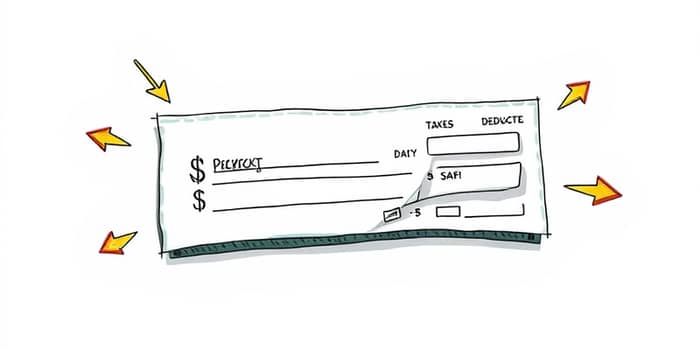
Every pay period, a paycheck arrives, but its numbers often feel like a mystery. Understanding this document is crucial for financial health and peace of mind.
By breaking it down, you can make informed decisions, optimize your earnings, and build a secure future. Let's embark on a journey to demystify your paycheck, piece by piece.
This knowledge empowers you to navigate your finances with confidence, turning abstract figures into actionable insights.
What Is Gross Pay?
Gross pay represents your total earnings before any deductions. It's the foundation of your paycheck.
For hourly employees, it's calculated by multiplying hours worked by the hourly rate. For salaried workers, it's a fixed amount per pay period.
This includes base pay, overtime, bonuses, tips, and commissions. Gross pay does not account for taxes or other subtractions.
For example, earning $20 per hour for 40 hours weekly gives a biweekly gross pay of $1,600. This figure is essential for budgeting and financial planning.
Withholdings: The Taxes You Pay
Taxes are mandatory deductions that fund public services. They significantly impact your take-home pay.
Federal income tax is based on your tax bracket. State and local taxes vary by location.
FICA taxes include Social Security and Medicare. These are required by law and support government programs.
- Social Security: 6.2% of gross pay
- Medicare: 1.45% of gross pay
Understanding these helps you anticipate deductions and plan accordingly. They are non-negotiable but vital for societal benefits.
Pre-Tax Deductions: Saving on Taxes
Pre-tax deductions reduce your taxable income, lowering your tax burden. They are optional but beneficial.
Money is subtracted before taxes are calculated. This provides immediate tax savings.
Common examples include health insurance premiums and retirement plans. Maximizing these deductions can enhance your financial well-being.
- Health insurance premiums
- 401(k) retirement contributions
- Flexible spending accounts (FSAs)
- Dental and vision insurance
By leveraging these, you keep more money in your pocket. It's a smart strategy for long-term savings.
After-Tax Deductions: Investing in Your Future
After-tax deductions are subtracted after taxes are applied. They don't reduce your taxable income now but offer future benefits.
These include investments like Roth IRAs and insurance policies. They provide post-tax advantages for retirement and security.
- Roth IRAs
- Disability insurance
- Long-term disability coverage
Understanding this helps balance immediate and future needs. It's about building resilience and growth.
Additional Deductions: When the Law Intervenes
Some deductions are court-ordered or for specific benefits. They are often non-optional but necessary.
Wage garnishments for child support are common. Benefit deductions like life insurance premiums also apply.
These ensure legal and personal obligations are met. Always verify their accuracy on your pay stub.
This table summarizes key additional deductions. Keep track to avoid surprises.
Employer-Paid Benefits: The Hidden Value
Employers often contribute to your benefits, adding value beyond your salary. These are shown on paychecks as employer contributions.
They include medical insurance, retirement plans, and more. This represents extra compensation that boosts your total earnings.
- Medical insurance contributions
- Dental insurance contributions
- Retirement plan matches
Recognizing this helps appreciate your full compensation package. It's a hidden boost to your financial health.
Net Pay: Your Take-Home Money
Net pay is what remains after all deductions. It's the amount deposited into your account.
This is your actual spending power. It fuels your daily life and financial goals.
Always verify net pay against expectations. If discrepancies arise, review deductions for errors.
Use net pay for budgeting essentials like rent and groceries. It's the tangible result of your hard work.
Year-to-Date Earnings: Tracking Your Progress
YTD earnings show cumulative totals since the year's start. They include gross pay, deductions, and net pay.
This helps monitor financial progress. It provides a big-picture view of your earnings journey.
For instance, tracking YTD can reveal trends in savings or tax payments. Use it to set and adjust financial goals.
- YTD gross pay: Total earnings before deductions
- YTD deductions: Sum of all subtractions
- YTD net pay: Earnings after deductions
Regularly checking YTD data empowers informed decisions. It's a tool for ongoing financial management.
Paid Time Off and Sick Days: Valuing Your Time
Many paystubs detail accrued PTO and sick days. This is calculated in hours, typically based on an 8-hour workday.
It represents your earned time off. Understanding this balances work and life effectively.
For example, 120 accrued PTO hours equals 15 days off. Plan vacations and breaks using this information.
Valuing this time promotes well-being and productivity. It's an integral part of your compensation.
Reading Your Pay Stub: A Step-by-Step Guide
Your pay stub holds key details beyond the numbers. Learning to read it ensures accuracy and clarity.
Look for the pay period dates and check number. Banking information shows where direct deposit goes.
This prevents errors and fraud in your earnings. Always keep records for tax purposes.
- Pay period: Dates covered by the paycheck
- Check number and date: Identification details
- Banking info: Direct deposit destination
- Leave time: Accrued PTO and sick days
Mastering this turns confusion into control. It's a skill that pays dividends in financial literacy.
Practical Tips for Financial Planning
Use paycheck understanding to budget wisely. Allocate net pay to needs, wants, and savings.
Optimize pre-tax deductions to reduce taxes. This maximizes your take-home pay over time.
Regularly review pay stubs for errors. Report discrepancies promptly to your employer.
Set goals based on YTD earnings. Adjust spending and saving habits accordingly.
Embrace this knowledge to build wealth. Your paycheck is more than money; it's a tool for a better life.
References
- https://careers.usf.edu/blog/2025/02/19/anatomy-of-a-paycheck/
- https://www.earnin.com/blog/how-to-read-a-pay-stub
- https://www.horizonpayrollsolutions.com/blog/anatomy-of-a-paycheck
- https://www.fidelity.com/learning-center/personal-finance/anatomy-of-a-paycheck
- https://www.lakeforestbank.com/articles/2023/03/breaking-down-the-parts-of-a-check.html