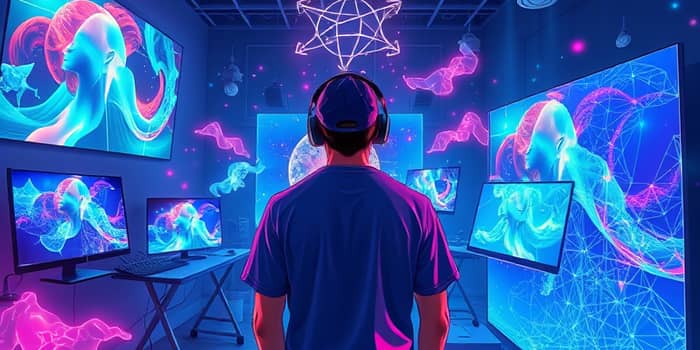
In a world where pixels can become prized possessions, digital creators stand at the forefront of a cultural revolution. More than ever, artists can transform artistic passion into profit by crafting unique digital assets that resonate with modern collectors. As the digital art market surges, understanding its dynamics is essential for any creator seeking success.
The path from concept to sale demands strategy, insight, and adaptability. This article explores the market’s growth, the technology powering it, the channels that deliver artwork to buyers, and the behaviors of new collector segments. We also offer practical tips for forging digital assets that stand out in an increasingly crowded space.
The Booming Digital Art Market
The past decade has witnessed a monumental shift in how art is created, distributed, and valued. The digital artwork market was valued at USD 5.8 billion in 2025 and is projected to reach USD 17.72 billion by 2032, at a robust CAGR of 17.3%. Beyond that, the broader digital art market could soar from USD 7.24 billion in 2025 to USD 30.69 billion by 2035, reflecting a CAGR of 15.53%.
Online art sales are equally impressive. With an estimated USD 11.79 billion in 2025, and projections near USD 19.25 billion by 2033, the digital art ecosystem offers creators unprecedented opportunities. Meanwhile, the AI in art market, valued at USD 5.3 billion in 2025, could explode to USD 40.4 billion by 2033, growing at 28.9% annually.
Pioneering Tools and Technologies
Modern creators leverage cutting-edge tools to push boundaries. Approximately 29% of digital artists now incorporate AI into their processes, and over half feel their human touch remains fundamentally essential in AI-assisted works. Meanwhile, augmented reality (AR) is poised to capture more than 35% market share among digital art mediums, weaving interactive layers into static compositions.
Virtual reality (VR) and immersive video formats are also gaining traction. The AR & VR market is forecast to grow from USD 1.5 billion in 2020 to USD 143.3 billion by 2025, at a staggering CAGR of 54.8%. Creators who master these platforms can deliver unforgettable experiences, transporting audiences into fully realized digital worlds.
Navigating Distribution Channels
Reaching buyers requires understanding the channels that dominate the digital art landscape. E-commerce leads with 40% market share and an expected CAGR of 16.47%, as dedicated galleries, marketplaces, and personal websites thrive online. Social media platforms and digital exhibitions further extend reach, fostering community engagement and instant feedback loops.
- Online marketplaces: Platforms like established NFT marketplaces and dedicated digital art shops.
- Social galleries: Instagram, Discord, and emerging virtual communities.
- Personal websites: Custom storefronts offering direct sales and branding control.
- Physical exhibitions: Galleries that integrate digital displays and QR code transactions.
Understanding Collector Dynamics
Collector behavior is evolving alongside technology. High-net-worth individuals allocated an average of 20% of their wealth to art in 2025, up from 15% the previous year. This reflects growing confidence in digital valuations and a willingness to diversify portfolios with innovative assets.
Gen Z collectors, especially women, are driving adoption. A recent survey revealed that 68% of Gen Z women owned digital artwork in 2025, compared to 49% of Gen X women. Younger buyers value the accessibility, authenticity, and shareability of digital pieces, transforming art ownership into a social experience.
Crafting Assets That Resonate
Creating art that sells requires more than technical skill; it demands emotional resonance. Begin by identifying a clear narrative or theme that speaks to a target audience. Whether exploring environmental motifs, cyberpunk aesthetics, or abstract concepts, ensure your work reflects distinctive personality and vision.
Consistency in style builds brand recognition. Develop a signature color palette, recurring motifs, or unique visual language. Engage audiences with behind-the-scenes content—time-lapse videos, process sketches, and interactive polls—to foster loyalty and anticipation for new drops.
Monetization Strategies and Pricing Models
Determining pricing can be challenging. Start by researching comparable works on marketplaces and factoring in edition sizes. Consider tiered offerings: limited-edition prints, one-of-one NFTs, and exclusive access bundles that include virtual meet-and-greets or personalized commissions.
Royalty structures in NFT smart contracts enable ongoing revenue streams. By setting a 5–10% royalty on secondary sales, artists ensure continued income as their works appreciate in value. Combine this with collaborations, licensing deals, and brand partnerships to diversify earnings.
Regional Growth and Future Outlook
Asia represents a significant growth frontier, expected to expand at a CAGR of 16.13% through the forecast period. Rapid digitalization, combined with a rising middle class and strong smartphone penetration, fuels demand for sophisticated, high-quality digital creations. Collaborative platforms and regional incubators are also emerging to nurture local talent.
Looking ahead, the integration of AI, AR, and VR will deepen, blurring boundaries between creator and consumer. Fully interactive galleries, AI-curated exhibitions, and cross-medium collaborations will redefine the essence of art. Creators who adapt to these trends can secure lasting success in an ever-evolving marketplace.
Conclusion
The digital art arena is both a crucible and a canvas—challenging yet brimming with possibility. By understanding market trends, adopting pioneering technologies, and crafting emotionally engaging assets, creators can forge a thriving path to success.
Seize the moment. Embrace innovation, refine your craft, and connect deeply with emerging collector communities. In the creator’s crucible, your unique digital assets can become not just commodities, but legacies that shape the future of art and commerce.
References
- https://superagi.com/future-of-digital-art-2025-trends-and-top-ai-illustration-tools-to-watch/
- https://prominentpainting.com/art-market-trends-for-2025/
- https://www.rootsanalysis.com/digital-art-market
- https://www.grandviewresearch.com/industry-analysis/online-art-market-report
- https://www.coherentmarketinsights.com/industry-reports/digital-artwork-market
- https://www.statista.com/topics/5254/global-online-art-market/
- https://artsmart.ai/blog/ai-in-the-art-market-statistics/
- https://www.artbasel.com/stories/digital-art-boom-gen-z-collectors?lang=en
- https://www.composition.gallery/journal/the-state-of-the-art-market-2025/
- https://blog.artsper.com/en/lifestyle/the-art-market-review-of-the-first-half-of-2025/
- https://www.ubs.com/global/en/our-firm/art/art-market-research.html
- https://www.myartbroker.com/investing/articles/art-market-2025-growth-at-the-lower-end-is-redfining-the-industry