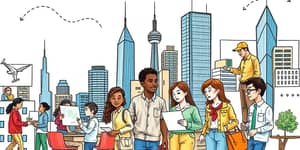
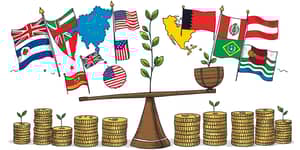
The digital divide is not just a technological issue; it is a social and economic chasm that determines who benefits from the global economy. With billions connected and billions more left behind, the gap shapes every aspect of modern life, from education to entrepreneurship.
Definition and Scope of the Digital Divide
The term digital divide refers to the gap between those who have reliable access to modern information and communication technology and those who do not. This divide is multi-dimensional, spanning economic development levels, urban versus rural geography, gender, age, and household income.
At its core, unequal access limits the ability of individuals and communities to participate fully in the digital age, undermining both personal well-being and national prosperity.
The Scale and Persistence of the Digital Divide
As of 2025, approximately 6 billion people—around 75% of the world’s population—use the internet. Yet 2.2 billion remain offline, the vast majority living in low- and middle-income countries (96% of the offline population).
- 94% online in high-income countries, compared to only 23% in low-income nations.
- Urban residents are 85% connected, while rural areas lag behind at 58%.
- Globally, 77% of men use the internet versus 71% of women, with pronounced gaps in many regions.
Youth engagement is higher, with 82% of individuals aged 15–24 online, compared to 72% of the general population. Despite progress, these figures reveal persistent barriers to universal connectivity.
Economic Impacts
The digital divide inflicts heavy macroeconomic costs. Projections indicate that inertia could cost the global economy over USD $500 billion in five years. In education alone, lost growth from out-of-school and under-skilled children could reach $10 trillion per year by 2030.
Developing countries miss out on a booming digital market. Their digital exports total around $1 trillion, a fraction of the global market that is five times larger. Every 10% increase in mobile broadband penetration correlates with a 2.5%–2.8% rise in GDP per capita, and fixed broadband adds another 0.8% boost.
- UK research shows that every £1 invested in digital skills generates £9.48 in economic return.
- Connected households save over £1,100 annually, while those offline often pay up to 25% more for basic goods and services.
- In low-income nations, a basic mobile data plan can consume 9% of average income, making it inaccessible for many.
Broader Social and Developmental Impacts
Inequitable digital access extends far beyond GDP figures, influencing education, health, civic engagement, and social inclusion. When people are excluded from digital services, entire communities fall behind.
- Education and Skills: Millions of students lack devices or home internet. In the UK, 4% of young people cannot participate in online classes.
- Employment and Entrepreneurship: Digital exclusion limits remote work, e-commerce participation, and local innovation, especially in rural or marginalized areas.
- Healthcare and Civic Engagement: Offline populations face obstacles to telehealth, financial services, and e-government, deepening information poverty.
- Crisis Amplification: During emergencies like the COVID-19 pandemic, the divide widens, isolating vulnerable groups from vital information and support.
Drivers and Determinants of the Divide
Economic status directly affects broadband access, device ownership, and the ability to afford services. Educational attainment strongly correlates with digital engagement, as those with higher formal education are more likely to acquire digital skills.
Infrastructure quality matters: although many regions now have 3G or 4G coverage, network reliability, speed, and security vary widely. Only 4% of low-income countries have begun 5G deployments, compared to 84% of high-income nations.
Closing the Divide — Solutions and ROI
Bridging the gap demands coordinated action across sectors. Investments in digital skills training yield remarkable returns, as demonstrated by the UK’s ninefold economic payoff. Scaling similar programs worldwide could unlock significant growth.
Affordability initiatives—such as subsidized data plans, low-cost devices, and community connectivity hubs—address cost barriers. However, sustainable inclusion also requires ongoing technical support, localized digital curricula, and context-sensitive policies.
Future Trends and Risks
The surge in demand for advanced digital competencies, including AI, cloud computing, and the Internet of Things, risks deepening divides unless access and literacy programs scale rapidly. The new frontier of the digital divide centers on active, meaningful digital participation, not just basic connectivity.
Without decisive policies and public–private collaboration, marginalized groups may be permanently sidelined in the knowledge economy, undermining global efforts toward inclusive growth and social equity.
Conclusion
Tackling the digital divide is both an economic necessity and a moral imperative. The potential costs of ignoring this challenge—in lost opportunity, widening inequality, and constrained innovation—are too great to bear.
By prioritizing equitable opportunity for all, stakeholders can ensure that every individual, regardless of geography or income, can harness the transformative power of digital technologies. This is the path to resilient economies and inclusive societies in the digital age.
References
- https://globaldigitalinclusion.org/2025/10/11/access-is-power-unpacking-the-true-cost-of-the-digital-divide/
- https://www.purple.ai/blogs/the-digital-divide-in-2025-why-connectivity-is-the-new-civil-rights-issue
- https://pulse.internetsociety.org/blog/the-new-digital-divide
- https://etradeforall.org/news/global-number-internet-users-increases-disparities-deepen-key-digital-divides
- https://www.advanced-television.com/2025/11/18/itu-global-internet-users-rise-but-disparities-deepen-digital-divides/
- https://www.weforum.org/stories/2024/01/digital-inclusion/
- https://www.benton.org/blog/computer-ownership-and-digital-divide
- https://unctad.org/news/digital-economy-new-frontier-trade-sustainability-and-inclusion