In an era defined by rapid change and digital connectivity, the world economy behaves like an enormous echo chamber. Shocks in one region reverberate elsewhere, while innovations spark waves of growth that span continents. Understanding this dynamic can empower policymakers, businesses, and individuals to anticipate challenges and harness opportunities.
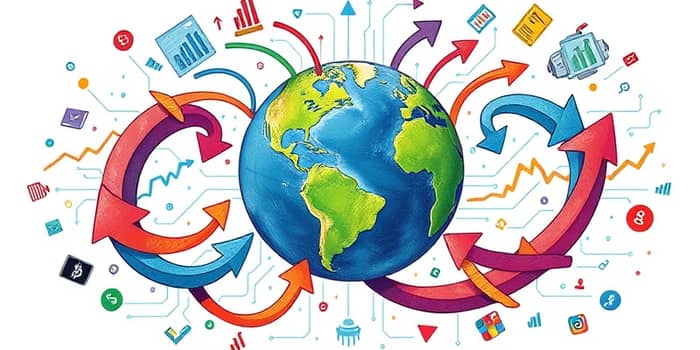
Interconnected global economies feed back into each other, creating patterns that amplify both threats and possibilities. From trade tensions to the rise of AI, every major shift travels through these economic corridors, shaping lives everywhere.
The Echo Chamber of Interconnected Economies
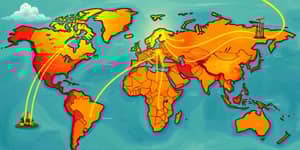
When the United States adjusts its tariff policy, the effects echo across Europe, Asia, and Latin America. Export-dependent industries feel the pinch, supply chains retool, and investment decisions shift. This feedback loops where slowdowns echo worldwide illustrate how no country truly operates in isolation.
At the same time, positive shocks—such as a surge in artificial intelligence spending—ripple outward, fueling productivity gains, job creation, and new business models. These resilience and tailwinds demonstrate how beneficial trends can propagate unevenly, creating growth pockets in advanced economies while emerging markets gradually catch up.
Global Growth Forecasts for 2026
Analysts anticipate worldwide growth of roughly 2.6 to 2.7 percent in 2026, a modest pace compared to pre-pandemic averages but bolstered by technology and policy support. Below is a comparison of leading forecasts:
While forecasts vary, the consensus underscores a phase of modest, resilient growth below long-term potential. Discrepancies reflect assumptions on tariffs, China’s recovery path, and the depth of the AI investment surge.
Regional Insights: Divergence and Convergence
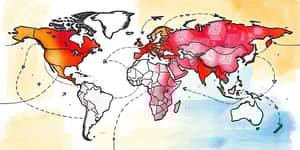
Growth patterns differ markedly by region, revealing how the echo chamber can both amplify and dampen economic forces.
- United States: Projected at 1.5–2.4%, driven by AI spending and fiscal easing, but weighed down by higher debt and trade tensions.
- Eurozone: Around 1.3–1.4%, with stable labor markets offsetting export headwinds from US tariffs and geopolitical uncertainty.
- China: Approximately 4.5–4.6%, slowed by property sector strains and overcapacity, yet supported by targeted fiscal expansion.
- India & South Asia: Surging at 5.6–6.6%, underpinned by robust consumption and infrastructure investment.
- Africa & Middle East: Growing at 3.9–4.1%, benefiting from oil production, local demand, and ongoing reforms.
- Latin America: Modest growth near 2.2–2.3%, aided by nearshoring trends and investment recovery.
This mosaic of outcomes highlights how individual economies can both echo and diverge from global trends. Regions with strong digital infrastructures and reform momentum tend to amplify positive shocks, while those burdened by debt or structural constraints lag behind.
Inflation and Cost-of-Living Strains
After the pandemic-era spikes, global headline inflation is forecast to ease to 3.1–3.8% in 2026. Yet disinflation remains uneven.
Supply chain bottlenecks, climate-related disruptions, and geopolitical risks keep food and energy prices volatile. Even as headline figures moderate, many households face persistent inflation pressures that strain real incomes.
In the US, the PCE index may settle around 2.7%, still above target. In Europe and Japan, food and energy costs keep consumer prices elevated despite policy efforts to stabilize markets.
Risks Amplifying Economic Shocks
Certain factors act as amplifiers in the echo chamber, heightening vulnerabilities:
- Trade and Tariffs: Uncertainty over USMCA reviews and Sino-US tensions dampens export growth and investment.
- Geopolitical Shocks: Conflicts in Western Asia and climate crises in Africa disrupt supply chains and investor sentiment.
- Debt Burdens: Elevated public and corporate debt limits fiscal response options in downturns.
- Overcapacity Issues: China’s excess production in steel, cement, and solar panels weighs on global prices.
- Labor Market Strains: Tight labor pools and infrastructure gaps restrict productivity and wage growth.
These risk factors can turn minor disturbances into global slowdowns, with repercussions that reach every corner of the economic landscape.
Tailwinds Driving Resilience and Innovation
Amid challenges, powerful forces generate hope and opportunity:
- Policy Support: Monetary and fiscal easing in major economies, full expensing provisions, and targeted stimulus uplift demand.
- Technology and AI: Surging investment in artificial intelligence, semiconductors, and digital infrastructure accelerates productivity and creates high-skill jobs.
- Private Sector Adaptability: Businesses pivot to new markets, adopt digital models, and optimize supply chains for resilience.
- Emerging Reforms: Structural changes in Africa, Latin America, and South Asia enhance long-term growth prospects.
These technology and policy support mechanisms act as positive echoes, spreading benefits across regions and offsetting headwinds from trade and debt.
Navigating the Future
The global economy’s echo chamber is both a challenge and an asset. By anticipating how downturns reverberate and leveraging the amplifying power of innovation, leaders can chart a more resilient course.
Practical steps include:
- Diversifying supply chains to reduce exposure to tariff shocks.
- Investing in digital skills and infrastructure to capture AI-driven gains.
- Strengthening fiscal frameworks to maintain policy space for support.
- Promoting regional cooperation to smooth cross-border shocks.
Ultimately, recognizing the echo chamber’s dynamics empowers stakeholders at every level. By turning risk into opportunity and harnessing the collective power of policy and innovation, we can ensure that global trends amplify prosperity rather than peril.
References
- https://desapublications.un.org/publications/world-economic-situation-and-prospects-2026
- https://www.deloitte.com/us/en/insights/topics/economy/global-economic-outlook-2026.html
- https://unctad.org/news/10-trends-shaping-global-trade-2026
- https://www.pwc.com/us/en/about-us/newsroom/press-releases/annual-outlook-2026.html
- https://www.coface.com/news-economy-and-insights/economic-outlook-for-2026-preparing-european-businesses-for-turbulence
- https://www.oxfordeconomics.com/key-themes-2026/
- https://rsmus.com/insights/economics/economic-outlook-for-2026.html
- https://www.spglobal.com/market-intelligence/en/news-insights/research/2026/01/global-economic-outlook-january-2026
- https://www.imf.org/en/publications/weo/issues/2026/01/19/world-economic-outlook-update-january-2026
- https://www.weforum.org/publications/global-risks-report-2026/digest/
- https://www.weforum.org/meetings/world-economic-forum-annual-meeting-2026/sessions/global-economic-outlook-af4fed3639/
- https://www.worldbank.org/en/publication/global-economic-prospects
- https://www.youtube.com/watch?v=cy5USJEyEsM