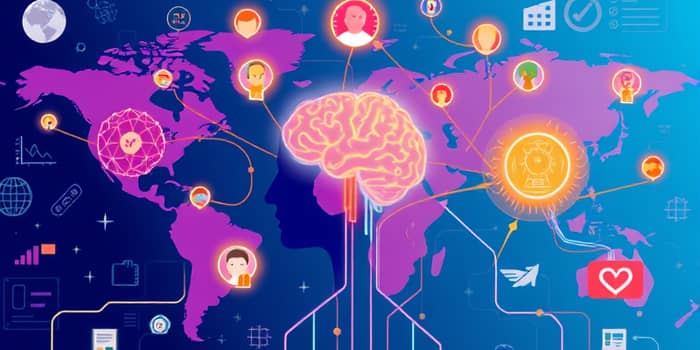
The concept of a brain trust has evolved from a historical advisory group into a global force for economic transformation, offering practical solutions to modern dilemmas.
By harnessing diverse expertise, it inspires innovation and resilience in ways that resonate deeply with our shared human experience.
This article explores how collective intelligence can guide us toward a more inclusive and sustainable future, blending historical wisdom with contemporary insights.
The Historical Origins of the Brain Trust
During the Great Depression, President Franklin D. Roosevelt turned to a group of academic advisers known as the Brain Trust.
They provided expert analysis and policy ideas to address the crisis, shifting from laissez-faire to government intervention.
Key figures included Raymond Moley, Rexford Tugwell, and Adolf Berle, who brought unique backgrounds to tackle economic and social problems.
Their work led to the New Deal, a series of programs that reshaped the U.S. economy.
This initiative demonstrated how specialized knowledge can drive meaningful change in times of upheaval.
The term brain trust came to denote close advisers emphasizing specialized expertise over traditional political roles.
It set a precedent for using collective intelligence in governance, inspiring future generations.
Key New Deal Programs and Their Impacts
The Brain Trust influenced numerous programs that stabilized the economy and provided relief.
- National Recovery Administration (NRA): Eliminated unfair practices and set labor standards.
- Tennessee Valley Authority (TVA): Provided cheap electricity to seven states.
- Home Owners’ Refinancing Act: Offered mortgage relief for the unemployed.
- Securities Act of 1933: Introduced government oversight of stock trading.
- Federal Deposit Insurance Corporation (FDIC): Protected bank depositors from failures.
Later additions included the Social Security Act and Works Progress Administration, furthering recovery efforts.
With unemployment at 25% and widespread bank crises, these interventions were crucial for stability.
They modeled how expert-driven policies can balance conflicting interests and foster long-term growth.
The Modern Brain Economy and Brain Capital Framework
Today, the brain economy reinterprets collective intelligence as brain capital, integrating brain health and skills as core assets.
This framework views cognitive abilities as drivers of innovation and productivity, comparable to infrastructure or GDP.
It emphasizes a holistic approach to economic policy, moving beyond short-term fixes.
By prioritizing brain health, we can address modern challenges like cognitive strain and mental health crises.
2024 Milestones and Initiatives in Brain Economy
Recent efforts highlight the growing momentum behind brain-positive transformations.
- Yaounde Declaration: Endorsed in August 2024, it provides a roadmap for brain economy transformation in Africa.
- Brain Bonds: Dialogues with the European Investment Bank aim to mirror multi-trillion-dollar Green Bonds.
- Sectoral Activities: Initiatives span health, education, work, and climate policy for integrated impact.
These steps reflect a shift toward valuing brains in economic planning, much like historical models did.
Core Pillars for Advancing Brain Economy
To build a brain-healthy world, four pillars guide advancement across sectors.
- Ecosystem: Convenings and alliances to foster collaboration and dialogue.
- Technical: Data research and education recommendations to inform policy decisions.
- Public Policy: Health systems and policy recommendations that prioritize brain impact.
- Innovation: Investments in neuroscience, such as gene editing and brain-computer interfaces.
Each pillar supports a comprehensive strategy for integrating brain capital into everyday life.
Strategic Objectives for Brain Capital Development
The Brain Capital Alliance outlines key goals to drive prosperity through brain-focused policies.
- Raise awareness of brains as central to economic success, similar to traditional metrics.
- Provide cross-disciplinary training for professionals to enhance collective intelligence.
- Conduct research on brain health determinants and prevention strategies.
- Adopt a holistic public health approach that is person-centered and non-disease-specific.
- Empower patients and caregivers while reducing stigma around mental health issues.
These objectives aim to create a resilient and innovative society by valuing cognitive resources.
Global Brain Trusts and Collective Intelligence Networks
Contemporary global brain trusts extend the historical concept to address modern challenges like AI and peacebuilding.
These networks build on the historical model to tackle global issues with collective wisdom.
Challenges and Opportunities in Brain-Positive Policies
Modern challenges include cognitive strain, productivity slowdowns, and social fabric erosion.
Opportunities lie in integrating neuroscience into areas like climate and urban planning.
Investments such as Brain Bonds offer pathways for long-term growth over quick fixes.
Critiques warn against instrumentalizing brains for economic gain, emphasizing human flourishing instead.
Key Themes and Practical Applications
To navigate this landscape, focus on core themes that blend historical lessons with modern needs.
- Evolution from domestic advisory groups to global economic frameworks.
- Collective intelligence as a tool for policy innovation and crisis management.
- Challenges like the Great Depression's 25% unemployment and today's mental health crises.
- Opportunities for brain-positive policies in education, healthcare, and digital regulation.
- Risks of viewing brains merely as productivity tools without holistic care.
By embracing these themes, individuals and policymakers can drive meaningful change.
Moving Forward with Collective Intelligence
The journey from FDR's Brain Trust to today's brain economy shows the enduring power of expert collaboration.
It inspires us to value our cognitive resources and work together for a better world.
With practical steps like fostering multidisciplinary training and investing in research, we can build resilient economies.
Let this narrative encourage you to engage in collective efforts, whether in policy or daily life.
By nurturing brain capital, we unlock potential for innovation and shared prosperity on a global scale.
References
- https://www.youtube.com/watch?v=HI4_6ns7jVQ
- https://www.britannica.com/topic/Brain-Trust
- https://theeconomyofmeaning.com/2025/12/18/why-the-brain-economy-could-become-the-next-big-policy-idea/
- https://en.wikipedia.org/wiki/Brain_trust
- https://www.armstrongeconomics.com/research/economic-thought/economics/roosevelts-brains-trust/
- https://pmc.ncbi.nlm.nih.gov/articles/PMC10917588/
- https://globalbraintrust.us
- https://warpreventioninitiative.org/peace-science-digest/building-peace-from-the-middle-the-critical-work-of-national-brain-trusts/
- https://globalbhptrust.com