In an era of rapid change and interconnected crises, our ability to manage humanity’s most vital shared resources has become more critical than ever. The Earth’s atmosphere, oceans, polar lands, and the expanse beyond our planet belong to no single nation; they represent a legacy entrusted to every generation. When we look at the horizon of possibilities, we see the promise of unified action, but also the peril of inaction. Humanity stands at a crossroads: whether to unleash creativity and solidarity or to drift toward fragmentation and scarcity.
This article invites you to explore practical pathways toward equitable and inclusive resource stewardship. You will learn about the core domains known as the global commons, understand the challenges they pose, and discover how cooperative efforts and bold innovations can forge a truly sustainable future for all.
Defining Our Planet’s Shared Heritage
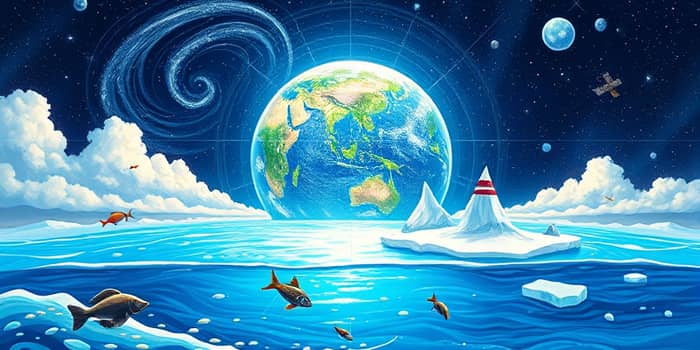
Global commons are domains of the Earth that transcend national boundaries. Rooted in the principle of the common heritage of mankind, these areas include spaces and resources no single country can claim. By stewarding these domains collectively, we protect the life-support systems on which we all depend. This approach requires robust cooperative governance structures that honor the rights and responsibilities of every person on the planet.
- High Seas (Oceans): Beyond national exclusive economic zones, rich in biodiversity and essential to climate regulation.
- Atmosphere: The shared envelope of air that sustains life, vulnerable to pollution and greenhouse gas accumulation.
- Outer Space: Satellite orbits and celestial bodies enabling communication, navigation, and scientific discovery.
- Antarctica: A frozen continent dedicated to peace and science, with no territorial claims.
Challenges at the Edge of Sustainability
The allure of unlimited access comes with a stark warning: the tragedy of the commons can emerge when short-term interests override long-term welfare. Without clear limits, fisheries collapse, atmospheric pollutants accumulate, and the pristine landscapes of Antarctica risk irreversible harm. Advancing technologies, like deep-sea mining and private space ventures, amplify the urgency for regulation and oversight.
Geopolitical tensions often intensify competition for resources. Financial incentives, such as the $7 trillion in global fossil fuel subsidies, favor extraction over conservation. Meanwhile, smaller nations may lack the influence to shape international policy, leading to inequities in both benefits and burdens.
- Overfishing and marine biodiversity loss
- Accelerating climate change and air pollution
- Unregulated resource extraction in polar and space environments
- Disparities in decision-making power among nations
Innovative Governance for a Shared Future
Responding effectively requires bold frameworks and institutions. International treaties like UNCLOS, the Outer Space Treaty, and the Antarctic Treaty System illustrate how bold new governance frameworks can unite diverse actors around common goals. Financial mechanisms inspired by the Kyoto Protocol show promise for channeling investments toward conservation and equitable resource use.
Emerging approaches emphasize transparency, accountability, and participation from civil society. By building coalitions that include governments, businesses, researchers, and communities, we can design policies that adapt to new challenges and technologies.
Economic Collaboration Models
Beyond treaties, new economic paradigms leverage collective intelligence and shared ownership. Commons-Based Peer Production harnesses the power of volunteer contributions to produce knowledge, software, and even material goods. Open cooperativism builds on this by creating enterprises that both generate revenue and reinvest returns into the community.
These models demonstrate how decentralization and trust can yield sustainable outcomes. They embed the values of open cooperativism and peer production into the very fabric of economic activity, ensuring that innovations remain accessible and adaptable.
- Commons-Based Peer Production model: Collaborative creation of public goods through open input and contribution accounting.
- Open cooperativism economic model: Shared ownership structures with transparent governance and circular supply chains.
- Community-Supported Agriculture partnership model: Local partnerships that stabilize income for producers and strengthen urban-rural connections.
Practical Steps for Communities and Individuals
Change begins with informed choices and collective action. Citizens can advocate for policies that phase out harmful subsidies and prioritize nature-positive investments. By supporting cooperatives, open projects, and ethical businesses, individuals channel resources toward models that respect ecological limits.
Educators and community leaders can foster awareness by organizing local workshops on sustainable living, carbon footprints, and resource sharing. Grassroots initiatives—like urban gardens or repair cafes—offer tangible experiences of mutual aid and resource efficiency.
At the global level, researchers and activists can contribute to open-data platforms that track environmental indicators and hold decision-makers accountable for their commitments.
Inspiring Collective Action
Our global commons embody both vulnerability and possibility. When we recognize our shared fate, we unlock a spirit of solidarity that transcends borders. By weaving together policy innovation, community engagement, and ethical entrepreneurship, we can craft a legacy of resilience and justice.
Every decision—whether reducing waste, joining a cooperative, or endorsing progressive policies—echoes across oceans, skies, glaciers, and galaxies. Let us rise to the challenge with creativity and compassion, forging a world where sustainable economic collaboration networks ensure that all generations inherit a thriving planet.
References
- https://www.savemyexams.com/a-level/geography/aqa/18/revision-notes/7-global-systems-and-governance/7-5-the-global-commons/7-5-1-concept-of-the-global-commons/
- https://thenextsystem.org/learn/stories/how-create-thriving-global-commons-economy
- https://en.wikipedia.org/wiki/Global_commons
- https://www.hbs.edu/bigs/new-era-of-collaboration-valuing-what-matters
- https://www.futures4europe.eu/post/global-commons-definitions-concepts-and-perspectives-towards-a-taxonomy-pwjil
- https://sharing.org/how-to-share-the-worlds-resources/sharing-the-global-commons/
- https://fiveable.me/key-terms/principles-microeconomics/global-commons
- https://exploreanthro.com/sustainable-development/understanding-global-commons/
- https://esg.sustainability-directory.com/area/shared-global-commons/resource/1/
- https://www.gmfus.org/news/governing-global-commons-challenges-and-opportunities-us-japan-cooperation
- https://sharing.org/information-centre/articles/global-commons-our-shared-resources/
- https://legal-resources.uslegalforms.com/g/global-commons
- https://academic.oup.com/book/1870/chapter/141622687
- https://smart.dhgate.com/why-are-global-commons-important-understanding-our-shared-resources/