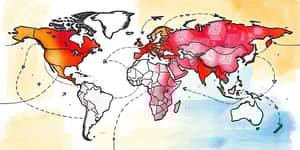
In an era of relentless interconnectedness, the metaphor of a Global Ledger emerges as a powerful symbol of unified, transparent record of transactions. This concept transcends traditional accounting, weaving a tapestry of global accountability that binds multinationals, regulators, investors, and everyday entrepreneurs into a single financial ecosystem.
Foundations and Perspectives
At its core, the Global Ledger builds upon the bedrock of double-entry bookkeeping mechanics. Every debit on one side has a corresponding credit, ensuring that assets equal liabilities plus equity. This foundation extends to an international canvas, where currency translation, consolidation, and reporting standards align to form a coherent whole.
- Multinational corporations navigating complex FX translations and consolidations.
- Local entrepreneurs adapting to regional compliance and transparency demands.
- Global investors seeking comparable, high-quality financial data.
These perspectives illustrate how cultural, economic, and regulatory influences shape not only the numbers, but also the trust that underpins every global transaction.
Harmonization via International Financial Reporting Standards
The adoption of IFRS has been likened to establishing a universal business language across borders. By enforcing consistent recognition, measurement, and disclosure principles, IFRS enables stakeholders to compare financial statements with confidence.
For instance, the European Union requires all member states to report under IFRS, fostering transparency and reducing informational asymmetries. Yet, some divergences remain—most notably the U.S. allowance of LIFO inventory accounting, a practice prohibited under IFRS that can materially affect profit and asset valuations.
These harmonized standards build a framework of trust and accountability in international markets, giving analysts and regulators the tools to make informed decisions and enforce compliance.
Core Processes: Consolidation, Currency, and Risk Management
Consolidation is the process of amalgamating financial statements of subsidiaries and branches into a single, cohesive report. It involves reconciling intercompany transactions, eliminating duplicates, and applying consistent exchange rates across reporting periods.
Effective currency translation and risk management guard against volatile foreign exchange swings, while international tax laws demand strategic navigation through diverse regimes. Together, these processes ensure that a multinational’s financial health is accurately reflected.
- Asset Accounts: cash, receivables, inventory, fixed assets with future value.
- Liability Accounts: payables, loans, bonds that quantify obligations.
- Equity Accounts: common stock, retained earnings, paid-in capital.
This robust chart of accounts underpins an audit trail for compliance verification, enabling real-time insights into profitability and risk exposure.
Innovations: Digital and Blockchain-Enabled Global Ledgers
Emerging technologies are revolutionizing the concept of the Global Ledger. The SWIFT network, historically known for secure messaging, now integrates a shared settlement ledger with smart contracts for atomic delivery-versus-payment. This collapses traditional reconciliation timelines and frees up capital.
- XBRL Global Ledger: digital taxonomy for transactional reporting and system-to-system data exchanges.
- Decentralized Finance (DeFi): permissionless ledgers offering transparent, peer-to-peer financial services.
- SAP S/4HANA Finance: unified ledger storing documents by accounting principle.
These innovations promise real-time settlement and embedded compliance controls, lowering barriers for fintech entrants and strengthening global trust networks.
Ethical and Strategic Implications for Accountability
Navigating this evolving landscape demands more than technical prowess—it requires an ethical compass. Professionals must uphold integrity, ensuring that every entry reflects genuine economic substance rather than creative financial engineering.
Audit and compliance teams leverage detailed general ledger records to drill down into journal entries, verifying accuracy and adherence to standards. The result is a verifiable trail of financial integrity that undergirds strategic planning, from scaling operations to managing cost structures.
As global systems become increasingly interoperable, money, data, and trust move together—unbounded by time zones. Organizations that embrace this paradigm will lead in an age defined by transparent, accountable international finance.
Ultimately, the Global Ledger metaphor encapsulates a vision where every transaction is recorded, validated, and harmonized in a seamless financial tapestry. By blending traditional general ledger principles with cutting-edge distributed ledger technologies, the world moves closer to full accountability in international finance—an ecosystem where transparency fuels trust, and trust propels economic growth.
References
- https://www.fastercapital.com/content/International-Accounting--Global-Ledger--A-Journey-into-International-Accounting.html
- https://corporatefinanceinstitute.com/resources/accounting/general-ledger-gl/
- https://www.netsuite.com/portal/resource/articles/accounting/general-ledger.shtml
- https://www.thoughtworks.com/en-th/insights/articles/SWIFT-Ledger-new-chapter-for-global-finance
- https://www.xbrl.org/the-standard/what/global-ledger/
- https://www.weforum.org/stories/2025/10/decentralized-finance-financial-markets-in-practice/
- https://www.devry.edu/blog/what-is-international-finance.html
- https://www.swift.com/news-events/press-releases/swift-add-blockchain-based-ledger-its-infrastructure-stack-groundbreaking-move-accelerate-and-scale-benefits-digital-finance
- https://blog.sap-press.com/what-is-an-sap-s4hana-finance-ledger