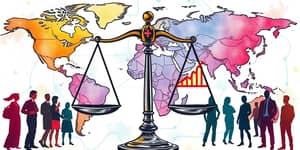
The Human Capital Index (HCI) represents a pivotal advance in how we measure, understand, and invest in the future productivity of nations. By capturing the interplay of health, survival, and learning, the HCI serves as both a diagnostic and aspirational tool for global development.
Definition and Purpose
At its core, the HCI is an annual composite measure developed by the World Bank to assess how effectively countries are mobilizing the economic and professional potential of their citizens. Unlike traditional indicators, the HCI quantifies the expected productivity of the next generation, representing the skills, health, and opportunities a child born today can expect by age 18.
Scaled from 0 to 1, the index transmits a clear message: a score of 1 signifies full realization of human capital, while a score of 0 indicates none. For instance, a country with a score of 0.7 projects that its future workforce will operate at 30% below potential, signaling a critical gap to address.
Methodology and Components
The HCI synthesizes core dimensions of health and education into a single productivity measure, grounded in empirical returns to human capital investments. Its pillars include survival, education quantity, education quality, and broader health proxies.
Using a direct link to productivity, the HCI estimates how much lower—or higher—a future worker’s output will be compared to the maximum possible, given ideal health and full-quality education. The technical formula applies estimated returns to health and education to convert raw indicators into meaningful productivity projections.
Data Sources and Calculation
Constructing the HCI requires integrating multiple data streams: administrative records, household surveys, demographic health studies, enrollment figures, and standardized assessment results. Each data point is carefully benchmarked against top-performing countries to establish realistic maxima.
The index also embraces uncertainty by reporting upper and lower bounds, reflecting statistical confidence and data gaps—especially in low-income contexts. This transparency ensures policymakers recognize both the index value and its inherent variability.
Global Results and Country Comparisons
The latest global average HCI hovers around 0.56 to 0.60, indicating that most nations achieve just over half of their workforce potential. Performance varies widely:
- Singapore consistently leads with scores near 0.88, reflecting robust health and education systems.
- Sub-Saharan Africa often records scores below 0.4, revealing urgent development needs.
- Morocco clocks around 0.5, meaning a child is expected to be only half as productive as possible.
Wealthier nations generally score higher, but exceptions highlight the impact of targeted reforms. Countries recovering from conflict—such as Ukraine—demonstrate how crises can sharply reduce human capital mobilization.
Policy Relevance and Strategic Insights
More than an academic exercise, the HCI is designed to drive evidence-based policy action. By focusing on outcomes—survival, learning, and health—it equips governments with clear priorities for investment in early childhood, schooling quality, and public health.
Compared with the UN’s Human Development Index, which includes income and broader well-being metrics, the HCI adopts a tightly focused economic lens. It measures what truly matters for future productivity rather than inputs or expenditures.
Critiques and Limitations
No index is without debate. Critics argue that the HCI’s instrumental framing risks reducing individuals to mere economic units, overlooking intrinsic values such as civic engagement, cultural enrichment, and personal fulfillment. Others caution that estimated returns to health and education can vary significantly by context, making the index sensitive to underlying assumptions.
Moreover, measurement uncertainty—stemming from uneven data quality—can obscure true progress, particularly in regions with limited statistical capacity. Policymakers must interpret HCI scores in conjunction with qualitative insights and local knowledge.
Applications, Implications, and Practical Steps
Despite its imperfections, the HCI offers a powerful framework for:
- Tracking progress: Monitoring changes over time to evaluate the impact of reforms, shocks, and investments.
- Informing budgets: Prioritizing spending on early childhood nutrition, teacher training, and health infrastructure.
- Benchmarking peers: Learning from higher-performing countries to adapt successful strategies.
At the national level, policymakers can use HCI results to design targeted interventions—such as conditional cash transfers for school attendance or expanded immunization campaigns—to address the most binding constraints on human capital.
International organizations and donors can align funding priorities with HCI insights, ensuring that resources focus on interventions with the highest returns.
Conclusion: Shaping a More Productive Future
The Human Capital Index transforms abstract development goals into measurable, outcome-oriented targets. By spotlighting survival, learning, and health, the HCI challenges nations to invest wisely in their greatest asset: people. As we navigate global challenges—from pandemics to technological shifts—the HCI offers both a compass and a call to action.
Ultimately, raising HCI scores is more than a statistical achievement; it is a commitment to ensuring every child around the world can thrive, learn, and contribute to a more prosperous, equitable future.
References
- https://en.wikipedia.org/wiki/Human_Capital_Index
- https://oneill.law.georgetown.edu/human-capital-index-as-a-tool-for-civil-society-accountability/
- https://gppreview.com/2018/11/28/whats-human-capital-index-policymakers-take-seriously/
- https://openknowledge.worldbank.org/server/api/core/bitstreams/92a39786-3d5d-5a28-9e73-ec6b7ea42eff/content
- https://www.jvi.org/special-events/2021/jvi-open-lecture-human-capital-index-what-is-it-and-why-should-we-care-about-it.html
- https://academic.oup.com/wbro/article-abstract/34/1/1/5492444
- https://www.ei-ie.org/en/item/22632:whats-wrong-with-the-world-banks-human-capital-index-by-david-edwards
- https://documents.worldbank.org/en/publication/documents-reports/documentdetail/300071537907028892/methodology-for-a-world-bank-human-capital-index
- https://ourworldindata.org/grapher/human-capital-index-in-2018