The informal economy operates in the shadows of official records, yet it sustains millions of livelihoods worldwide. From street vendors to home-based artisans, these workers engage in transactions that evade formal notice but drive local and regional markets. Governments and policymakers often overlook this sector, despite its vital role in providing flexible income and opportunities where formal employment is scarce.
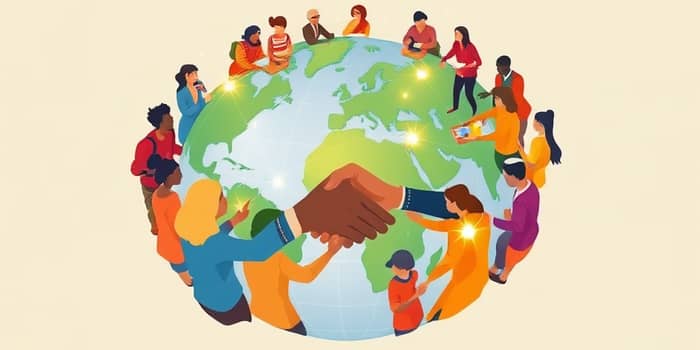
At its core, the informal economy includes unregistered firms and informal employment by household units, providing livelihoods for 2 billion workers worldwide. Such activity accounts for vast swathes of production, with participants reliant on trust and community networks—an invisible handshake that fuels trade and survival amid economic uncertainty.
A Sweeping Global Phenomenon
Informality spans every continent, from sprawling urban markets to rural workshops. According to the ILO, over half of the global labor force lacks formal contracts, social protections, or registered status. This situation translates to 35% of GDP in low/middle-income countries, compared with only 15% in high-income economies, underscoring stark regional disparities.
These figures reflect millions of unregistered enterprises operating without official oversight, from micro-vendors to freelance professionals. The table above highlights how women disproportionately bear the burdens and potential of informality, especially in the poorest regions.
Invisible Institutions and Cross-Border Trade
Beyond physical markets, informal systems rely on networks of trust, norms, and relationships—what economists term informal institutions. These structures influence trade volumes and patterns across 200+ countries, revealing the power of non-observed cross-border trade in shaping balance of payments and regional integration.
Recent data show South–South trade growing at an 8% annual rate, outpacing global averages. Regional trade corridors in East Asia (10%), South America (7%), and parts of Africa (10%) illustrate how informal channels supplement formal supply chains, especially when tariffs or regulations impede rapid exchanges.
The 2025 Trade Boom and Informal Resilience
Global trade reached over $35 trillion in 2025, with goods rising by $1.5 trillion and services by $750 billion. Manufacturing output surged 10%, led by electronics and AI-driven sectors, while agriculture climbed 6% on strong cereal and fruit exports. Despite these gains, informal traders and workers demonstrated remarkable adaptability, absorbing shocks and sustaining local economies in the face of supply chain disruptions—a testament to goods and services trade surge powering communities.
Gender Disparities and Policy Pathways
Women represent a significant share of informal workers, especially in low-income countries where up to 92% of women in informal jobs rely on unprotected incomes. These patterns deepen gender gaps in earnings and social protections, with projections warning that 342 million women and girls could earn less than $2.25 per day by 2030 unless targeted interventions occur.
- Policy alignment with gender targets
- Access to finance and training
- Strengthening social protection nets
By enacting policies like the African Union Protocol on Women and Youth in Trade, governments can craft inclusive frameworks that recognize informal contributions and support transitions into formal markets without sacrificing autonomy.
Bridging Gaps: Measurement and Formalization
Quantifying the informal economy poses serious hurdles. Researchers employ direct survey methods alongside DGE/MIMIC models for output to estimate unrecorded activities. Integrating these approaches into national accounts, as outlined in SNA/BPM7 guidelines, promises a more comprehensive picture, but requires sustained investment and technical collaboration.
- Enhance data collection frameworks
- Invest in digital infrastructure
- Promote international cooperation
These steps can yield granular insights into regional and sectoral trends, enabling more effective policies that reduce vulnerabilities and support sustainable livelihoods.
Charting a Path Forward
Formalizing informal economies does not mean erasing them; rather, it entails recognizing and organizing existing networks to provide protections, access to credit, and legal recognition. By bridging policy gaps and fostering inclusive growth, nations can harness the dynamism of informal actors—turning that invisible handshake into a visible force for prosperity.
Ultimately, embracing the informal economy’s strengths and addressing its challenges opens pathways to resilience, equity, and shared prosperity across global trade landscapes.
References
- https://unctad.org/publication/global-trade-update-december-2025-global-trade-poised-record-breaking-2025-flows
- https://www.weforum.org/stories/2024/06/what-is-the-informal-economy/
- https://www.worldbank.org/en/research/brief/informal-economy-database
- https://papers.ssrn.com/sol3/papers.cfm?abstract_id=5774408
- https://ilostat.ilo.org/topics/informality/
- https://www.worldeconomics.com/Informal-Economy/
- https://www.oecd.org/en/data/insights/statistical-releases/2025/11/international-trade-statistics-trends-in-third-quarter-2025.html