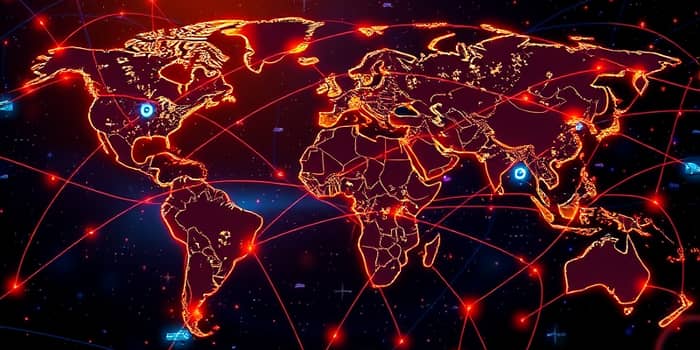
In an era of rapid change, our world is woven together by mutually reliant economic relationships. From the goods we consume to the energy we power our lives with, every aspect of modern life depends on a delicate web of connections that spans the globe.
Globalization and Trade Networks
Globalization has unlocked unprecedented gains in efficiency and prosperity. Nations specialize in industries where they hold competitive advantages. The United States, for example, imports textiles from China while exporting advanced technology.
These cross-border trade networks have given rise to complex supply chains that span multiple continents. As companies seek to manage risk, they diversify sourcing, shifting manufacturing to Vietnam and Indonesia. This diversification not only spreads opportunity but also introduces new interdependencies.
Supply Chain Concentration and Risks
While diversification offers resilience, certain sectors remain highly concentrated. Critical minerals used in batteries and semiconductors are often sourced from a handful of countries. The Democratic Republic of Congo dominates cobalt mining, and China controls large shares of solar panel production and electric vehicle components.
This concentration creates vulnerabilities. A geopolitical dispute or climate event in a key sourcing region can reverberate across multiple industries, disrupting production and driving price volatility.
Technology and the AI Revolution
Technology accelerates interdependence at a breathtaking pace. Investments in artificial intelligence have become a crucial driver of economic growth. In early 2025, about one-third of U.S. GDP growth stemmed from AI investment in data centers and semiconductor capex.
These investments are not confined to North America. The Asia-Pacific region is rapidly expanding its digital infrastructure, with countries like China and India emerging as significant beneficiaries of accelerating AI capital expenditure.
- Data center expansion fueling regional growth
- Semiconductor supply chains spanning East Asia
- Automation and smart manufacturing hubs
Energy Security and the Green Transition
Decarbonization efforts have forged new ties between nations. Renewable energy equipment, from solar panels to wind turbines, relies on components sourced worldwide. Two-thirds of global solar and wind additions originate in China, while critical minerals for batteries flow from Africa and Latin America.
Major corporations have pledged collaborative investments—over $19 billion by 2030—to support new materials for aviation, shipping, and heavy industry. These cross-sector sustainability commitments illustrate how climate goals intensify economic interdependencies.
Geopolitical Fragmentation and Regional Shifts
Geopolitical tensions are reshaping global ties. The U.S.-China rivalry, tariffs on certain imports, and new trade pacts introduce both friction and opportunity. Indian oil imports face U.S. tariffs, while an anticipated U.S.-India trade agreement could open fresh routes.
Regional dynamics are evolving. Asia’s share of world GDP continues to rise, propelled by India’s growing domestic market, Vietnam’s manufacturing boom, and China’s AI-led recovery. The Middle East diversifies beyond oil, investing in logistics and tourism, while Africa benefits from robust demographics and rising domestic demand.
Managing Risks and Building Resilience
With complexity comes vulnerability. Companies and governments must anticipate shocks—be they climatic, geopolitical, or financial—and build buffers.
- Maintain strategic reserves of critical materials
- Diversify supplier networks across regions
- Invest in digital infrastructure for real-time monitoring
By adopting proactive risk mitigation strategies, stakeholders can navigate disruptions with greater agility.
Policy Interconnections and Fiscal Strategies
Fiscal and monetary policies do not operate in isolation. Public spending in infrastructure, technology, and defense shapes how economies absorb external shocks.
China’s advanced infrastructure projects and AI investments contrast with India’s focus on manufacturing and services. The U.S. balances defense logistics with innovation incentives. Coordinated policies—domestic and multilateral—will be essential to manage inflationary pressures and debt burdens in emerging markets.
Envisioning a Multipolar, Interconnected Future
As we look toward 2030, economic power centers will realign. The United States is projected to remain the largest economy, with China close behind and India ascending rapidly. Asia as a whole will command a majority of global GDP, driving technological and industrial innovation.
This multipolar world demands fresh approaches:
- Multilateral cooperation on standards and regulations
- Regional trade agreements that balance efficiency and security
- Joint research initiatives in AI, clean energy, and biotechnology
Through collaborative global governance frameworks, nations can harness interdependencies for collective benefit, mitigating risks while seizing opportunities.
Ultimately, the invisible threads that bind our economies are also conduits for shared prosperity. By understanding these complex linkages and adopting resilient strategies, businesses and policymakers can thrive in a world defined by dynamic economic interconnections and ever-evolving challenges.
References
- https://researchfdi.com/2026-fastest-growing-global-economies-outlook/
- https://www.hanwha.com/newsroom/news/feature-stories/davos-2026-how-dialogue-shaped-this-years-world-economic-forum.do
- https://helpfulprofessor.com/interdependence-examples/
- https://internationalbanker.com/finance/three-key-factors-influencing-the-global-economy-in-2026/
- https://www.cfr.org/articles/visualizing-2026-five-foreign-policy-trends-watch
- https://www.deloitte.com/us/en/insights/topics/economy/global-economic-outlook-2026.html
- https://trendsresearch.org/insight/political-strategic-and-economic-trajectories-in-2026/