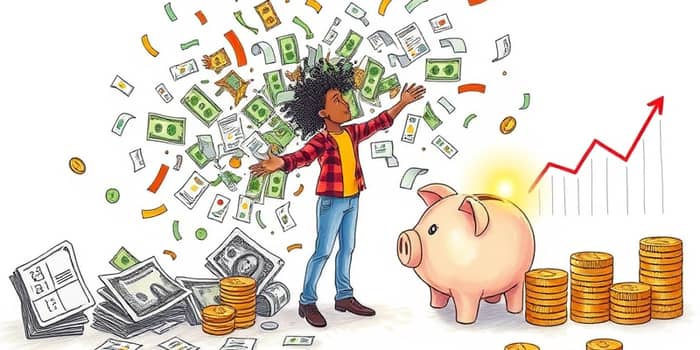
As Americans head into 2026, financial feelings are split between worry and determination. Recent surveys reveal that 32% expect personal finances to worsen next year, the highest since 2018, driven by rising costs, stagnant incomes, and mounting debt. Yet a remarkable 76% feel confident their finances will improve, underlining a collective resolve to enact change. This article maps out how you can turn that tension into a structured plan, replacing uncertainty with control and hope.
The Financial Chaos Unveiled
Household budgets have borne the brunt of soaring costs and mounting credit card bills. Inflation, which peaked at 9.1% in 2022, has pushed prices up roughly 25% since 2020. Meanwhile, record household debt soared to $18.33 trillion by mid-2025, leaving the average consumer with over $104,000 in obligations. This combination of factors has created widespread financial disarray.
Stress levels remain high. A recent study found that 61% of Americans name money as their top stressor and 53% report increased financial anxiety. Gen Z leads in living paycheck to paycheck (44%), while 37% of all households say managing money feels overwhelming. These figures underscore the urgency of a makeover from reactive chaos to proactive clarity.
The Imperative for Change
Despite the challenges, momentum for improvement is building. Surveys show that 93% of individuals plan to change how they manage money in 2026, and 54% carry regrets from 2025 they’re determined to fix. Top goals include paying down debt, increasing savings, boosting income, and adopting better budgeting practices.
With half of Americans prioritizing savings and nearly one-fifth focused on debt reduction, the stage is set for a systematic financial overhaul.
The Makeover Blueprint
Transforming chaos into clarity requires a step-by-step approach. Begin by understanding your current position, then deploy targeted strategies to build momentum. Follow this four-part blueprint to get started:
- Debt Attack Strategy: Develop a comprehensive debt payoff plan that targets high-interest balances first. Consolidate or refinance where possible to reduce rates and accelerate progress through extra payments.
- Emergency Fund Foundation: Aim to save at least $1,000 as a starting buffer, then build toward covering three to six months of expenses. This cushion prevents new debt when unexpected costs arise.
- Mindful Spending Makeover: Track every dollar and categorize expenses. Shift discretionary spending toward what truly matters and cut impulses with simple rules like a 24-hour wait on nonessential purchases.
- Growth Through Income: Explore side hustles or negotiate a raise. Even a modest boost of 10–15% in monthly earnings can significantly accelerate debt payoff and savings milestones.
Building Lasting Clarity
Long-term success depends on embedding new habits and leveraging technology. The following trends and tools help ensure you stay on track and adapt as life changes:
- Automated Savings and Investments: Schedule automated transfers for savings and investments to occur right after payday, making progress effortless and consistent.
- Ongoing Monitoring Practices: Conduct quarterly budget reviews instead of an annual check-in. This ensures you catch deviations early and adjust before small issues become large setbacks.
- Mindful Habit Reinforcement: Use apps or journals to record spending emotions and triggers. Reviewing these notes weekly helps maintain focus on value-aligned choices.
- Resilience Through Predictable Strategies: Rely on predictable strategies that foster lasting resilience, like loyalty-scenario swaps for optimal interest rates and rewards programs that align with your lifestyle.
By embracing ongoing monitoring for consistent financial health and routinely refining your approach, you build a defense against future economic shocks, from inflation surges to market downturns.
Ultimately, the journey from chaos to clarity is rooted in proactive decision-making and disciplined execution. As 44% of Americans plan to start their resolutions immediately, there’s no better moment than today to enact your own money management makeover. With structured steps, smart tools, and a resilient mindset, you can write your own success story in 2026 and beyond.
References
- https://www.bankrate.com/banking/financial-outlook-survey/
- https://www.intuit.com/blog/innovative-thinking/2026-financial-forecast-mindful-stress/
- https://www.nerdwallet.com/finance/studies/2026-consumer-outlook-report
- https://www.statista.com/statistics/1173591/opinion-personal-financial-situation-past-year-age-us/
- https://www.experian.com/blogs/ask-experian/financial-trends-this-year/
- https://www.axios.com/sponsored/5-financial-trends-you-can-bank-on-in-2026
- https://www.privatebank.bankofamerica.com/articles/2026-consumer-outlook.html
- https://www.youtube.com/watch?v=DBZ2LPjhV9o