From the caravan trails of antiquity to the cutting-edge corridors of today, the Belt and Road Initiative (BRI) reimagines connectivity on a global scale. Inspired by the ancient Silk Roads, President Xi Jinping launched the Silk Road Economic Belt and the 21st Century Maritime Silk Road in 2013, uniting over 150 countries under a shared vision.
More than a mere infrastructure program, the BRI strives to foster people-to-people bonds and trust across continents. It weaves economic partnerships, cultural exchange, and sustainable development into a tapestry of cooperation.
Origins and Vision
The genesis of the BRI echoes the spirit of the ancient Silk Roads that once linked East and West. In September 2013, the Silk Road Economic Belt was unveiled in Kazakhstan, followed by the Maritime Silk Road in Indonesia a month later.
Rebranded to emphasize unity rather than exclusivity, the BRI seeks to achieve five interrelated goals: policy coordination for mutual growth, facilities connectivity, unimpeded trade, financial integration, and people-centered partnerships.
Core Components: The Belt and the Road
The BRI unfolds across two complementary frameworks:
- Silk Road Economic Belt: Revitalizing ancient overland routes through railways, highways, and pipelines that link China with Central Asia and Europe.
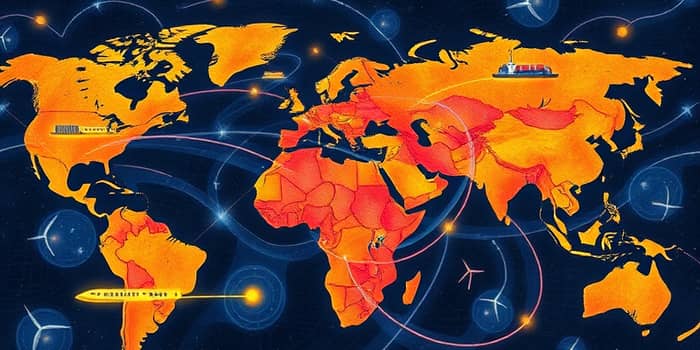
- 21st Century Maritime Silk Road: Building port facilities, bridges, and fueling stations along sea lanes connecting Southeast Asia, Africa, and Europe.
Together, they create integrated transport networks that bypass bottlenecks and expand global trade horizons.
The Numbers Behind the Network
Over a decade, the BRI has mobilized unprecedented capital flows and construction efforts. By 2023, cumulative engagement reached over 1.053 trillion USD, divided into 634 billion in construction contracts and 419 billion in non-financial investments.
Notably, the 2023 energy engagement of 7.9 billion USD became the greenest on record, reflecting a shift toward eco-friendly infrastructure investments.
Driving Global Connectivity and Growth
The BRI’s transformative power lies in reducing transport costs, optimizing supply chains, and enhancing production networks. By forging new corridors, it unlocks:
- Faster transit times for goods and raw materials.
- Deeper integration into global value chains.
- Expanded market access for local producers.
Projections suggest that by 2040, the initiative could boost global GDP by up to 7.1 trillion USD, creating new opportunities in manufacturing hubs across Southeast Asia and revitalizing industries in Africa and Eastern Europe.
Sustainability and Innovation
At its heart, the BRI champions a green development agenda. It promotes low-carbon infrastructure, renewable energy projects, and sustainable finance mechanisms to align with global climate goals.
The Digital Silk Road complements physical links by deploying fiber-optic cables, data centers, and AI collaborations that bridge the digital divide. This dual approach fosters resilient economies and inclusive growth.
Overcoming Challenges
Despite its achievements, the BRI faces valid critiques. Some analyses highlight debt sustainability concerns for host nations, which require careful financial planning and transparent loan terms.
Additionally, measured studies have found that the most significant trade gains often stem from pre-existing economic ties. To address this, stakeholders must:
- Enhance local capacity-building and technology transfer.
- Negotiate fair contracts that share risks and rewards.
- Foster open dialogue with community leaders and civil society.
By adopting these practices, participating countries can mitigate dependency risks and maximize long-term benefits.
Looking Ahead
As the BRI moves beyond its first decade, it is poised to expand into new frontiers, including the Arctic Blue Belt and space-based logistics. Emerging priorities include digital currencies, cross-border data governance, and joint research on clean technologies.
For businesses and policymakers seeking to leverage the New Silk Roads, success hinges on strategic alignment with local development plans, meticulous project appraisal, and a steadfast commitment to sustainability.
By embracing collaborative frameworks and people-centered approaches to development, the global community can ensure that the modern Silk Roads deliver equitable prosperity and lasting connections across continents.
References
- http://www.scio.gov.cn/zfbps/zfbps_2279/202310/t20231010_773734.html
- https://greenfdc.org/china-belt-and-road-initiative-bri-investment-report-2023/
- https://www.chathamhouse.org/2021/09/what-chinas-belt-and-road-initiative-bri
- https://theloop.ecpr.eu/chinas-belt-and-road-initiative-re-evaluating-the-economic-impact/
- https://www.cfr.org/backgrounder/chinas-massive-belt-and-road-initiative
- https://www.tandfonline.com/doi/full/10.1080/10971475.2025.2526259
- https://greenfdc.org/belt-and-road-initiative-about/
- https://www.caixabankresearch.com/en/economics-markets/recent-developments/belt-and-road-initiative-double-edged-sword-part-i
- https://www.chinahighlights.com/silkroad/new-silk-road.htm
- https://www.economicsobservatory.com/the-belt-and-road-initiative-what-impact-on-china-and-the-global-economy
- https://chinapower.csis.org/china-belt-and-road-initiative/
- https://en.wikipedia.org/wiki/Belt_and_Road_Initiative
- https://www.thomsonreuters.com/en-us/posts/international-trade-and-supply-chain/global-trading-risk-china-belt-road-initiative/
- https://www.cfr.org/task-force-report/chinas-belt-and-road-implications-for-the-united-states/findings
- https://www.carnegie.org/our-work/article/new-silk-road/
- https://www.congress.gov/crs-product/IF11735