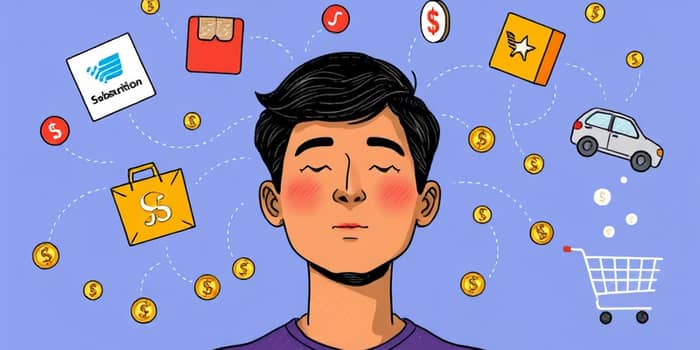
Every tap, click, or swipe can feel like a small victory in our busy lives. Yet these tiny moments of ease often come attached to hidden fees and emotional tolls that add up over time. Understanding the real cost of convenience is the first step toward reclaiming control of your wallet and your well-being.
Definition of Convenience Spending
Convenience spending covers a wide range of services and purchases designed to save us time or effort. From meal deliveries to streaming subscriptions, the underlying promise is simple: make life easier. But beneath that promise lurks an insidious financial drain that can erode budgets and derail long-term goals.
Experts define this phenomenon as the accumulation of small, often unnoticed charges—auto-renewals, surge pricing, tips, service fees—that seldom trigger a second thought. Alone, each cost may be trivial, but together they form a pattern of ongoing leakage from your bank account.
Psychological Drivers Behind the Convenience Trap
Our brains are wired to prioritize immediate rewards over future gains. Marketing teams leverage principles like commitment and consistency, making us stick with a service long after its novelty fades. The endowment effect further convinces us that what we own holds more value, even when we rarely use it.
Mental accounting biases lead us to underestimate the sum of small fees. We treat each transaction as isolated, forgetting the way they pile up. Meanwhile, status quo bias and inertia keep subscriptions active, because canceling seems like more hassle than it’s worth.
Impulsive triggers—apps that store payment details or one-click checkouts—remove friction and encourage emotional spending. Whether we’re battling stress, boredom, or the fear of missing out, convenience becomes an easy coping mechanism. All the while, our awareness fades, and financial decisions slip into the background noise.
Everyday Examples and Their Hidden Charges
Let’s break down some of the most common convenience expenses that quietly inflate monthly budgets:
- Subscriptions: The average person holds ten recurring services, totalling $647 each month, with $381 on discretionary plans. Auto-renewals, price hikes, and forgotten free trials feed subscription creep.
- Food Delivery: Delivery fees, tips, and surge multipliers can double the cost of takeout. What feels like a $15 meal often runs $30 once all charges are added.
- Online Shopping & BNPL: Buy-now-pay-later options hide interest and late fees, and saved cards enable impulse buying. Small purchases multiply into significant credit-card balances.
Below is a quick summary of categories and their typical hidden costs:
Spotting the Warning Signs
How can you tell if convenience is sabotaging your finances? Watch for these red flags:
- You often ask yourself, “Where did my money go?” despite a steady income.
- Your savings remain stagnant, or you rely on credit cards for essentials.
- You’ve forgotten to cancel free trials or are paying for unused services.
- Small, routine purchases now feel like permanent habits instead of occasional treats.
Strategies to Regain Control
Conquering convenience spending doesn’t mean eliminating all pleasures—it’s about making conscious choices. Try these practical tactics to build healthier financial habits:
- Audit every transaction over a 30-day period to identify recurring charges and impulse buys.
- Introduce friction points—remove saved payment methods, use wishlists instead of one-click orders, and set a shopping cooldown of 24 hours.
- Establish clear rules: limit takeout to two nights per week, avoid purchases after 9 p.m., and batch errands to cut ride-share dependency.
- Use subscription management tools and calendar reminders for trial expirations to prevent auto-renewal surprises.
Balancing Convenience and Financial Well-Being
Not all convenience is detrimental. The goal is to retain services that genuinely add value while curbing those that drain resources. Ask yourself if each service or purchase aligns with your priorities and long-term goals.
Reframing convenience as a choice rather than an entitlement empowers you to draw boundaries. By paying attention to seemingly trivial fees and applying disciplined spending rules, you can preserve ease without losing sight of future financial security.
Ultimately, taking proactive control transforms convenience from a silent budget assassin into a tool that supports your goals. With awareness, strategy, and occasional restraint, you can enjoy modern comforts—and your bank account—without compromise.
References
- https://blog.smithclinic.ing/the-hidden-costs-of-convenience-unraveling-the-subscription-economys-impact-on-consumer-behavior-and-financial-well-being/
- https://www.cuindependent.com/when-convenience-spending-becomes-a-monthly-trap-2/
- https://blog.sunsetfinance.net/the-creepy-cost-of-convenience
- https://josebriones.substack.com/p/the-hidden-costs-of-convenience
- http://oreateai.com/blog/the-hidden-costs-of-convenience-understanding-the-price-we-pay-for-instant-gratification/edca3d10f468f01bbfaf2f3333662766
- https://homespunseasonalliving.com/when-convenience-becomes-burden/