In today's fast-paced world, achieving financial security often feels like an elusive dream.
Yet, by embracing responsible management of resources, you can transform uncertainty into opportunity and build a legacy of prosperity.
Financial stewardship is not merely about budgeting or saving; it represents a profound commitment to accountability for entrusted assets and ethical decision-making.
This article will guide you through creating a stewardship scorecard, a powerful tool to measure and enhance your financial responsibility.
Discover how this approach can inspire confidence, ensure sustainability, and empower you to take control of your financial future.
What is Financial Stewardship?
Financial stewardship involves the wise and ethical handling of money and resources.
It extends beyond personal finance to include organizations, governments, and investors, fostering long-term sustainability and trust.
At its core, stewardship emphasizes a fiduciary duty to act in the best interests of others.
This principle ensures that resources are used efficiently for intended purposes, preventing waste and fraud.
Key aspects include transparency in reporting and compliance with regulations.
- Acting with integrity and honesty in all financial matters.
- Prioritizing long-term goals over short-term gains.
- Engaging stakeholders through open communication and feedback.
- Integrating environmental, social, and governance (ESG) factors into decisions.
By adopting these practices, you can create a resilient financial foundation that withstands challenges and promotes growth.
The Framework of Stewardship Accounting
Stewardship accounting provides a structured way to manage and report financial resources.
It ensures transparency and ethical practices, making it essential for businesses, non-profits, and governments alike.
This framework revolves around core values that guide responsible behavior.
- Responsibility: Handling resources to meet organizational or personal goals effectively.
- Regulatory compliance: Adhering to laws and standards to avoid legal issues.
- Efficient resource use: Minimizing waste and maximizing value to promote sustainability.
- Accountability: Maintaining accurate records and answering for financial decisions.
Improvement strategies can enhance this framework significantly.
- Conduct periodic financial reports to keep stakeholders informed.
- Engage independent external audits to verify accuracy and integrity.
- Develop clear governance policies to outline roles and responsibilities.
- Involve stakeholders in key decisions to build trust and alignment.
Implementing these strategies helps prevent fraud and ensures resources are used as intended.
Real-World Examples of Stewardship in Action
Seeing stewardship in practice can inspire and provide practical insights.
Across sectors, individuals and entities demonstrate how ethical management leads to success.
- In corporations, managers use shareholder investments to drive growth, issuing transparent reports to maintain trust and attract further funding.
- Non-profits track donations meticulously, ensuring funds reach intended projects and providing public reports to donors and regulators.
- Governments allocate taxpayer funds for infrastructure, using budgets and audits to promote accountability and deter corruption.
- Small businesses leverage loans for expansion, keeping detailed records to ensure timely repayment and foster lender confidence.
- Investors focus on long-term value, engaging with companies through voting and ESG reporting to monitor performance and impact.
These examples show that stewardship is adaptable and vital for all financial contexts.
Integrating Stewardship with the Balanced Scorecard
The Balanced Scorecard (BSC) is a strategic tool that can be tailored for stewardship measurement.
It tracks performance across four perspectives, helping align actions with goals.
In stewardship-focused applications, the financial perspective is often reframed as Stewardship or Budget Accountability.
- Financial/Stewardship Perspective: Focuses on outcomes like resource efficiency and fiduciary compliance, ensuring wise use of entrusted funds.
- Customer/Stakeholder Perspective: Measures performance for served groups, such as customers or beneficiaries, to build satisfaction and trust.
- Internal Process Perspective: Evaluates the efficiency and quality of operations, streamlining activities like budgeting and auditing.
- Organizational Capacity Perspective: Assesses people, culture, and technology for long-term success, fostering skills and ethical culture.
By integrating these perspectives, you create a holistic view that goes beyond mere numbers.
Strategy maps can visually link elements, showing how capacity improvements lead to better processes and stakeholder outcomes.
Building Your Stewardship Scorecard: A Practical Guide
Creating a stewardship scorecard involves customizing the BSC framework to measure financial responsibility.
Start by defining clear strategic objectives that reflect your stewardship goals.
Then, select key performance indicators (KPIs) to track progress against these objectives.
Ensure KPIs are objective, time-bound, and understandable for all involved parties.
Cascading the scorecard from enterprise to individual levels ensures alignment and accountability.
Regular reviews, such as quarterly assessments, help adapt to changes and maintain focus.
Key Metrics and Implementation Steps
To make your scorecard actionable, include specific metrics across the four perspectives.
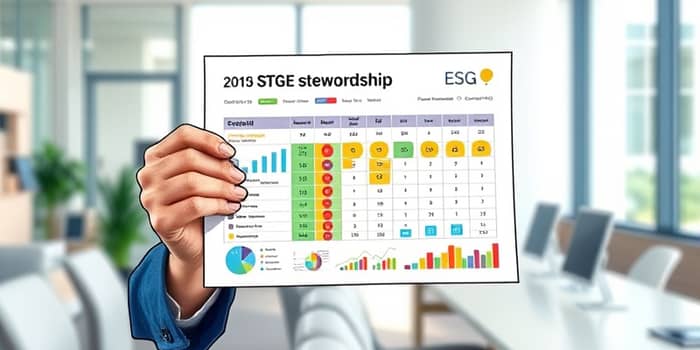
This table provides sample KPIs to inspire your customization.
Implementation steps are straightforward and can be adapted to your needs.
- Set clear objectives for each perspective, focusing on measurable outcomes that drive improvement.
- Choose 3-5 KPIs per perspective to avoid overload and ensure focus on critical areas.
- Cascade the scorecard through tiers, from organizational goals to team and individual targets.
- Use strategy maps to visualize how different elements connect and support overall stewardship.
- Conduct regular reviews, adjusting KPIs and strategies based on performance data and feedback.
This process empowers you to take control and see tangible results.
Benefits and Challenges of Stewardship Measurement
Adopting a stewardship scorecard offers numerous advantages for personal and organizational growth.
It provides holistic tracking beyond finances, aligning short-term actions with long-term visions.
Benefits include enhanced trust from stakeholders, improved compliance with regulations, and better resource allocation.
It also fosters a culture of accountability and continuous improvement.
However, challenges may arise, such as resistance to change or difficulty in selecting relevant KPIs.
Overcome these by engaging stakeholders early, providing training, and starting with simple metrics.
- Prevents fraud by promoting transparency and regular audits.
- Builds stakeholder confidence through open communication and ethical practices.
- Ensures sustainability by integrating ESG factors and long-term planning.
- Tailors to specific sectors, such as focusing on net zero goals in investment contexts.
By addressing these challenges proactively, you can maximize the scorecard's impact.
Conclusion: Embracing Stewardship for a Secure Future
Financial stewardship is a journey that transforms how you manage resources and build legacy.
The stewardship scorecard serves as a compass, guiding you toward responsible and ethical practices that ensure prosperity.
Start today by defining your goals, selecting key metrics, and involving others in the process.
Remember, it's not about perfection but progress—each step toward accountability brings you closer to financial freedom.
Embrace this approach to create a brighter, more sustainable future for yourself and those you serve.
References
- https://www.wesleyanlearn.com/mod/page/view.php?id=268
- https://plutuseducation.com/blog/stewardship-accounting/
- https://stewardshipcode.nz/what-is-stewardship
- https://greenco-esg.com/stewardship/
- https://balancedscorecard.org/bsc-basics/articles-videos/the-four-perspectives-of-the-balanced-scorecard/
- https://www.thephoenixgroup.com/news-views/what-is-stewardship-and-how-can-it-make-a-difference/
- https://hc.edu/center-for-christianity-in-business/2024/10/24/stewardship-and-priestly-measures-within-a-balanced-scorecard/
- https://lifestyle.sustainability-directory.com/area/financial-stewardship-responsibility/