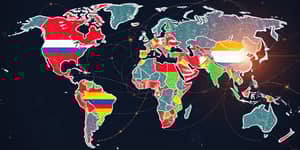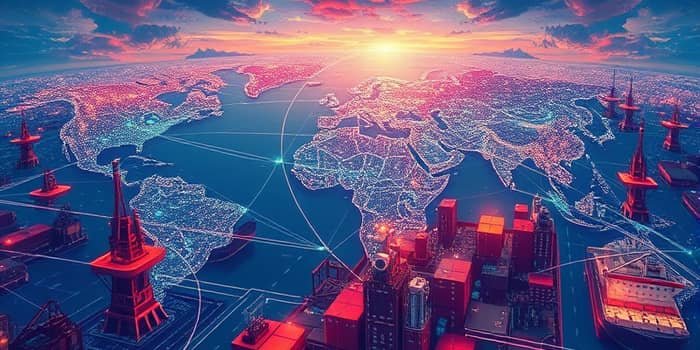
The global economy is undergoing a profound transformation as firms and nations rethink how they design, produce, and deliver goods. This paradigm shift in global production is driven by technology, geopolitics, sustainability, and strategic choices, leading to a fundamental remapping of value chains worldwide.
Understanding these changes is essential for policymakers, business leaders, and workers seeking to navigate emerging opportunities and risks.
Understanding Value Chains and Global Value Chains
A value chain encompasses the full lifecycle of a product or service, from initial R&D and design to sourcing, manufacturing, distribution, consumption, and end-of-life management. It integrates both physical transformation and producer services like branding, marketing, and after-sales support.
When these activities are fragmented across borders, we refer to them as global value chains (GVCs). In a GVC, raw materials from one country may become components in another, be assembled in a third, and then tested, packaged, and sold elsewhere.
This international fragmentation of production allows firms to tap specialized skills, lower costs, and access new markets, but also introduces complexity and interdependence.
The Evolution and Remapping of Global Value Chains
Historically, firms performed most production stages in-house or within a single country. Over recent decades, rising consumer demand for variety, intense competition, and the search for efficiency led to the disaggregation of production into modular stages.
However, recent shocks—ranging from trade wars and pandemic-induced lockdowns to geopolitical tensions—exposed vulnerabilities in far-flung networks. Companies are now prioritizing agility and resilience alongside cost.
Remapping strategies include:
- Reshoring production to the home market for tighter control and risk reduction.
- Nearshoring to neighboring countries to balance cost savings with proximity.
- Friendshoring toward aligned economies to mitigate geopolitical uncertainty.
By diversifying supplier bases and moving some operations closer to end markets, firms aim to reduce lead times and safeguard against future disruptions.
Technologies and Policies Driving the Revolution
Four converging forces are reshaping how products flow around the world:
- Digitalization and AI
- Geopolitical macro-shocks
- Sustainability and regulation
- Corporate strategy shifts
Smart factories powered by the Industrial Internet of Things (IIoT) and AI are becoming the norm. Real-time monitoring, predictive maintenance, and adaptive production lines boost flexibility and efficiency. Software-centric sector, with digital systems at its core, manufacturing is evolving into a data-driven ecosystem.
Meanwhile, regulatory frameworks such as stringent ESG reporting, carbon border adjustments, and product-safety standards force firms to enhance traceability and data transparency requirements. They must map every component’s origin and environmental footprint, adding new layers of capability to the value chain.
Winners, Losers, and Strategic Implications
The remapping of value chains creates clear winners and losers. Countries and firms that invest in digital infrastructure, workforce skills, and regulatory compliance stand to gain.
Conversely, regions reliant on low-cost production without upgrading capabilities may face stagnation or decline. Developing economies can still capture value by climbing the GVC upgrading ladder through process, product, and functional improvements.
Policymakers can facilitate this progress by investing in education, infrastructure, and innovation systems. Trade openness, quality logistics, and strong governance further connect firms to global networks.
Corporate leaders, in turn, must balance efficiency with resilience, embedding scenario planning, multi-sourcing, and digital twins into their operations. Resilience up the corporate agenda ensures that future shocks, whether from pandemics or political upheavals, do not cripple production.
Finally, the shift toward product-service systems: remote monitoring and performance offerings highlights how intangible services are becoming high-margin complements to physical goods. Manufacturers are now software developers, data analysts, and service providers, generating recurring revenue streams long after a machine leaves the factory floor.
As value chains are remapped, the stakes are high: economic growth, employment, and national competitiveness hinge on the ability to adapt. By embracing technological innovation, aligning with regulatory trends, and strategically diversifying production footprints, stakeholders can seize the immense potential of this new era of global production.
References
- https://www.ebsco.com/research-starters/business-and-management/global-value-chains-gvcs
- https://www.infotech.com/research/key-trends-reshaping-manufacturing-in-2025-amid-supply-chain-volatility-revealed-in-new-report-from-info-tech-research-group
- https://en.wikipedia.org/wiki/Global_value_chain
- https://www.alpha-sense.com/blog/trends/manufacturing-trends-outlook/
- https://www.cisl.cam.ac.uk/education/graduate-study/pgcerts/value-chain-defs
- https://www.tecma.com/six-strategic-trends-shaping-the-future-of-manufacturing-in-2025/
- https://dhl-freight-connections.com/en/trends/global-value-chain/
- https://gembah.com/blog/manufacturing-trends-2025/
- https://www.worldbank.org/en/topic/global-value-chains
- https://www.riministreet.com/blog/7-manufacturing-industry-trends-driving-change-in-2025/
- https://unstats.un.org/unsd/business-stat/gvc.cshtml
- https://www.sdcexec.com/sourcing-procurement/manufacturing/article/22947583/board-international-5-trends-reshaping-us-manufacturing-in-2025
- https://www.ismworld.org/supply-management-news-and-reports/news-publications/inside-supply-management-magazine/blog/2025/2025-09/three-strategic-trends-reshaping-global-supply-chains/
- https://unctad.org/news/2025-most-read-stories-reflecting-key-forces-global-economy