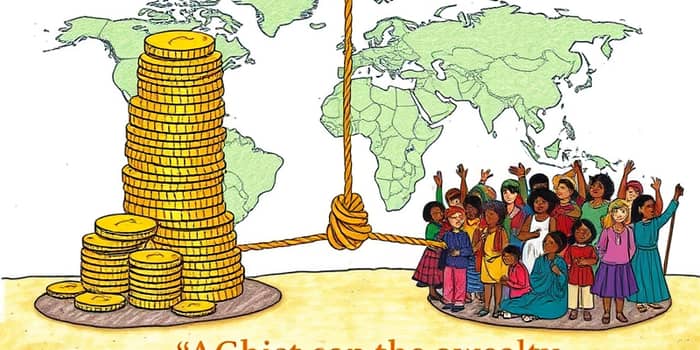
At the heart of global economic tensions lies a simple truth: wealth is not evenly shared. While some celebrate unprecedented prosperity, millions around the world struggle daily to secure basic needs. This disparity is more than just numbers; it is a question of dignity, opportunity, and justice. Only by shedding light on hidden disparities can we begin to chart a course toward lasting inclusive prosperity for all.
In this article, we’ll explore the scale of inequality, its root causes, and tangible pathways to a fairer future. Readers will find both deep analysis and practical ideas to advocate for change in their communities and beyond.
Understanding the Scale of Global Inequality
The latest research paints a stark picture: 560 million adults in the top decile earn 53% of all income, while the 2.8 billion people in the bottom half share just 8%. The middle 40%, amounting to 2.2 billion adults, capture 39% of income—leaving a yawning gap at both extremes.
When focusing on wealth rather than income, the contrast intensifies. In North America and Oceania, the richest tenth hold over 520 times the assets of the bottom half. In Europe, the ratio is nearly 200 to one. These disparities trace back through history, woven into patterns of land ownership, colonial legacies, and evolving financial systems.
Drivers of the Wealth Gap
Inequality emerges from multiple, interlocking forces. Strong property rights can reward innovation, but unchecked, they birth dynastic wealth. While wages reflect labor contributions, capital gains accelerate asset accumulation for owners of real estate, stocks, and bonds. Over time, this dynamic compounds advantages for those who already have substantial investments.
- Inequality of opportunity persists globally: When education spending per child in Sub-Saharan Africa is just €200 versus €9,000 in wealthy regions, futures are predetermined by geography.
- Financial flows favor rich nations: Annually, one percent of global GDP moves from poorer to richer countries through unequal yields and repayment terms.
- Political influence skews decision-making: Billionaires are thousands of times more likely to shape policy than ordinary citizens.
Combined, these factors create a feedback loop where wealth begets more wealth, while barriers block millions from upward mobility. Breaking this cycle requires targeted interventions at every level of society.
Regional Perspectives: A Closer Look
Inequality metrics vary widely around the world. In South Africa, one of the most unequal nations, historical segregation and modern economic policies drive a Gini coefficient above 63. Across Latin America, countries like Colombia and Brazil exhibit coefficients above 50, reflecting severe gaps in income and land distribution.
In contrast, many European nations maintain coefficients near 30, thanks to social safety nets, progressive taxation, and accessible public services. Asia shows a mixed picture: India’s inequality measures around 25, while China’s urban-rural divide contributes to a higher coefficient near 36.
These figures remind us that policy choices matter. Countries that invest heavily in healthcare, education, and social housing typically see lower levels of inequality.
Trends and Recent Developments
Over the past 30 years, the bottom 50% of adults worldwide saw their wealth grow by 3.4% annually. Meanwhile, the top 1% achieved gains of around 3.1%, and the top tenth grew at 2.9%. Yet the wealth of billionaires soared at a breathtaking 8% per year, widening the chasm.
In 2025, billionaire fortunes alone rose by 16%, adding $2.5 trillion—enough to eradicate extreme poverty 26 times over. During that period, the number of billionaires surpassed 3,000, and Elon Musk’s net worth briefly exceeded $500 billion—a single fortune eclipsing the combined assets of hundreds of millions.
Bridging the Divide: Pathways to Equity
Transforming these trends calls for bold, coordinated action. While no single strategy will suffice, a holistic approach can yield lasting results.
- Strengthen progressive tax systems: Tax codes must ensure that the wealthiest contribute fairly, funding public services that uplift all citizens.
- Invest in universal education: Guaranteeing quality schooling and vocational training empowers individuals to participate fully in the economy.
- Regulate global financial transparency: Close loopholes that enable tax evasion and shadow banking, and mandate public registers of beneficial ownership.
- Limit undue political sway: Impose strict donation limits, lobby regulations, and public financing of campaigns to dilute wealthy interests.
These measures can be pursued domestically and through international cooperation, such as multilateral agreements on tax harmonization and development financing.
Empowering Communities and Individuals
While systemic reforms are essential, grassroots efforts animate true progress. Community-led cooperatives, social impact bonds, and digital platforms that facilitate micro-lending bring capital to underserved areas. By supporting these initiatives, everyday citizens can help redistribute opportunity and resources.
Advocacy also plays a pivotal role. Whether writing to representatives, participating in peaceful demonstrations, or leveraging social media, public pressure has historically driven major policy shifts—from labor rights to universal healthcare.
A Call to Collective Action
Confronting wealth inequality is not just an economic project; it is a moral mission. When a small minority commands the lion’s share of resources, global stability and social cohesion suffer. Poverty, exclusion, and resentment can stoke unrest and undermine democratic institutions.
Yet, a more equitable world is within reach. By illuminating the forces that concentrate wealth, championing policies that broaden access, and engaging in collective action, we can create a future where prosperity is shared, not hoarded. This vision calls on governments, businesses, and individuals to act in concert.
Let us commit to a fairer economic order—one where every person has the chance to thrive, and where the benefits of growth uplift entire communities, not just a privileged few.
References
- https://wir2026.wid.world/insight/global-economic-inequity/
- https://wid.world/news-article/world-inequality-report-2026-inequality-persist-at-a-very-extreme-level/
- https://worldpopulationreview.com/country-rankings/wealth-inequality-by-country
- https://www.oxfam.org/en/press-releases/billionaire-wealth-jumps-three-times-faster-2025-highest-peak-ever-sparking
- https://www.oxfam.org.uk/get-involved/campaign-with-oxfam/fight-inequality/oxfams-global-inequality-report/
- https://www.oxfamamerica.org/explore/issues/economic-justice/extreme-inequality-and-poverty/