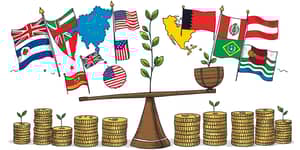
Over two hundred years ago, Adam Smith unveiled a work that forever transformed economic thinking. Published in March 1776, this book laid the groundwork for understanding how markets coordinate human activity. As we confront unprecedented global challenges—from climate change to digital disruption—it is time to revisit Smith’s insights and explore new lenses through which to view prosperity.
Historical Foundations and Smith’s Vision
Smith devoted nearly two decades to refining his analysis, producing what became a fundamental work in classical economics. His observations on the division of labour and productivity demonstrated how specialization boosts output, while his advocacy for free markets highlighted the power of price signals to allocate resources efficiently.
His famous invisible hand metaphor regulating the marketplace captured the idea that individuals pursuing self-interest contribute to collective welfare. Yet Smith also cautioned against unchecked power, critiquing monopolies, high tariffs on luxury goods, and the slave trade. He envisioned a state with limited but essential roles: upholding justice, providing public institutions, and protecting society from violence and injustice.
Modern Redefinition of Wealth and Capital
In the twenty-first century, the concept of wealth must extend beyond monetary income to include natural and human assets. As climate pressures mount and biodiversity declines, policymakers recognize that sustainable growth depends on preserving natural capital. The 2006 World Bank report ‘‘Where Is the Wealth of Nations?’’ was a turning point, urging measurement of a nation’s true wealth rather than just its annual income.
Contemporary frameworks build on Smith’s broad view of capital but expand it for today’s realities. Modern economists stress that how we measure development will drive policy choices and long-term outcomes. To capture this, wealth is categorized into:
- Produced assets (machinery, infrastructure)
- Non-produced assets (land, mineral deposits, ecosystem services)
- Human capital (education, health, skills)
Metrics of Global Prosperity Today
Building on these classifications, the global Prosperity Index now evaluates six dimensions of well-being and sustainability. By examining a blend of individual flourishing and social equity, it offers a holistic view of progress.
- Income
- Health
- Education
- Inequality
- Minorities
- Environment
Recent data reveal that overall prosperity continues to rise worldwide, yet trends vary by region. Income inequality peaked during the early 2000s but has shown modest improvements. Health outcomes gained momentum until the COVID-19 setback, while environmental quality steadily improved. Treatment of minorities has become a growing concern in recent years.
The Freedom-Prosperity Nexus
Data consistently show a strong positive correlation of 0.71 between freedom and prosperity. Nations that embrace rule of law and open societies tend to outperform their peers economically. When countries enhance civil liberties and property rights, they unlock entrepreneurial energy and investment.
Among freedom’s pillars, the legal environment—fair courts, transparent regulations, and reliable enforcement—emerges as the primary driver of growth. Conversely, political freedoms, while vital for human dignity, show a weaker direct link to economic metrics.
Emerging Markets: Engines of the Future
Emerging and developing economies, representing 85% of the world’s population, are now the primary engines of growth and innovation. Their projected 3.7% expansion in 2025 dwarfs the pace of advanced economies. These regions are not merely catching up; they are charting novel pathways in technology, manufacturing, and green energy.
By fostering inclusive institutions and investing in education and infrastructure, emerging markets demonstrate resilience of systems and fairness of outcomes. Their success stories underscore the potential of tailored reforms and public-private collaboration to lift millions out of poverty.
Enduring Relevance of Smith’s Ideas
Smith’s legacy endures in classrooms and boardrooms alike. His insistence on justice and institutional integrity resonates with today’s calls for environmental and climate justice. Integrating his principles with modern imperatives, we can design policies that grow wealth responsibly and equitably.
Debates about the state’s role in public education, infrastructure, and security trace back to Smith’s own prescriptions. He envisioned a government that safeguards liberties while enabling citizens to pursue opportunity—a balance still at the heart of policy dialogues worldwide.
Charting the Path Forward
Revisiting ‘‘The Wealth of Nations’’ invites us to blend time-tested wisdom with twenty-first-century challenges. By broadening our definition of capital, adopting holistic prosperity metrics, and strengthening freedom, we can foster sustainable and shared growth.
Every stakeholder—policymaker, entrepreneur, educator, and citizen—has a role in this new era of global prosperity. Let us heed Smith’s call for justice, innovate boldly, and collaborate across borders to ensure that future generations inherit not just wealth, but a flourishing world.
References
- https://en.wikipedia.org/wiki/The_Wealth_of_Nations
- https://www.atlanticcouncil.org/in-depth-research-reports/report/the-path-to-prosperity-the-2025-freedom-and-prosperity-indexes/
- https://www.economicsobservatory.com/where-is-the-wealth-of-nations-in-the-21st-century
- https://mitsloan.mit.edu/centers-initiatives/ksc/new-calculus-prosperity-rise-global-growth-markets-new-engine-progress
- https://www.imf.org/en/publications/weo/issues/2025/07/29/world-economic-outlook-update-july-2025
- https://www.panmurehouse.org/perspectives/articles/how-america-made-adam-smith-an-icon-and-why-we-still-need-to-read-him/
- https://www.worldbank.org/en/publication/global-economic-prospects
- https://www.chicagobooth.edu/review/adam-smiths-relevance-1976
- https://www.socialprogress.org/social-progress-index
- https://statisticstimes.com/economy/projected-world-gdp-ranking.php
- https://www.imd.org/centers/wcc/world-competitiveness-center/rankings/world-competitiveness-ranking/
- https://www.oecd.org/en/publications/2025/09/oecd-economic-outlook-interim-report-september-2025_ae3d418b.html