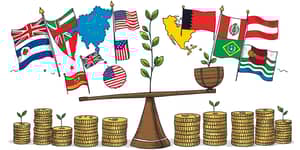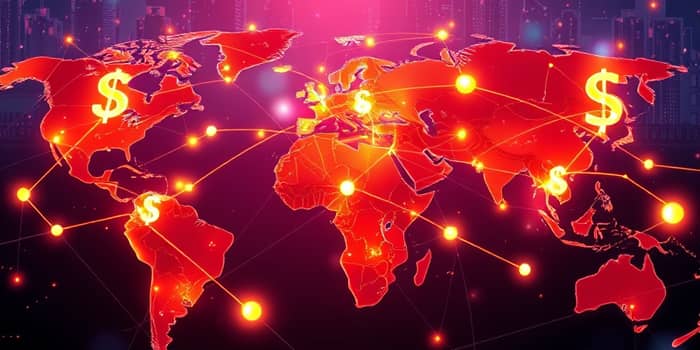
From bustling trading floors to digital platforms, the foreign exchange market shapes global finance and everyday life.
Overview of the Forex Market
The Forex (foreign exchange) market stands as the world’s largest financial market, with daily trading volumes exceeding $6 trillion. It is decentralized and operates 24/7, spanning major financial centers such as London, New York, Tokyo, and Singapore. Its high liquidity enables rapid currency trades, making it a vital hub for governments, institutions, and individual traders around the globe.
Unlike stock exchanges, Forex trading never sleeps: as one market closes, another reopens. This continuous cycle supports seamless capital flows and allows participants to respond to economic data, political events, and market sentiment in real time.
Major Participants
Understanding who trades in Forex helps explain its depth and complexity. The key players include:
- Central banks, influencing monetary policy and exchange rates.
- Commercial banks, executing large interbank transactions.
- Institutional investors, such as hedge funds and pension funds.
- Corporates and exporters/importers managing currency risk.
- Retail traders accessing online platforms for speculative or hedging purposes.
Each participant has distinct objectives: central banks pursue stability, institutions seek profit, and corporates aim to mitigate risk.
Currency Pairs & Market Structure
Currencies trade in pairs, quoted as base currency/quote currency. For example, USD/EUR means one US dollar’s value in euros. The most traded pairs include:
- USD/EUR
- USD/JPY
- USD/GBP
- USD/CAD
- EUR/GBP
- USD/CNY (reflecting China’s rising market share at 6.6%)
Exchange rate regimes influence how freely currencies move:
Determinants of Currency Value
Several factors drive exchange rate movements. Key economic indicators include:
- GDP growth: Strong growth often leads to currency appreciation over time.
- Unemployment rates: Declining unemployment signals economic health and stability.
- Inflation: Low, stable inflation usually supports currency strength.
- Interest rates: Rate hikes attract foreign capital, boosting currency demand.
- Trade balances: Surpluses reinforce currency strength; deficits can weaken it.
- Fiscal policy: Surpluses or reduced deficits support long-term appreciation.
Market sentiment and external shocks—financial crises, pandemics, geopolitical tensions—can trigger extreme volatility, sometimes overshadowing fundamental drivers.
Role of Central Banks & Government
Central banks wield powerful tools to steer currency values. Through interest rate adjustments, direct FX interventions, and macroprudential measures, they aim to achieve stable inflation and sustainable growth.
For instance, the U.S. Federal Reserve’s aggressive rate hikes in 2022–2023 drove the USD from 1.22 to 0.92 against the euro, demonstrating how policy shifts can spark rapid currency appreciation.
Dollar Dominance and Global Currency Dynamics
The US dollar remains the dominant global reserve currency, used in 54% of trade invoicing and comprising around 60% of global FX reserves (2022). Its supremacy is underpinned by:
- The size and openness of the US economy.
- High liquidity in dollar markets.
- Widespread use in trade, debt issuance, and transactions.
The “Dollar Smile” theory explains that the USD strengthens during periods of either strong US growth or global uncertainty, and weakens when global risks are low and external growth is robust.
However, recent trends (2024–2025) reveal atypical USD weakness, even amid risk aversion. Key drivers include improved investment prospects in Europe and China, active reserve diversification, and de-dollarization efforts prompted by geopolitical tensions and sanctions.
Impact on Global Trade and Economy
Exchange rate fluctuations have tangible effects on international trade and economic health:
• A strong currency makes exports more expensive, reducing demand abroad.
• A weak currency lowers export prices, boosting competitiveness.
Managing currency risk through hedging instruments has become essential for multinationals, as unanticipated moves can erode margins and disrupt supply chains.
Recent Developments and Data
In early 2025, renewed fund flows into European assets fueled euro appreciation against the dollar. Meanwhile, persistent US current account deficits combined with steady capital inflows are shaping dollar dynamics.
China’s managed float system continues to evolve: the digital yuan and Belt and Road initiatives have expanded the CNY’s role in cross-border trade, nudging the global FX landscape toward multipolarity.
Reserve managers are gradually diversifying holdings, with emerging market currencies gaining traction. This shift signals a slow but steady multipolar future for global finance.
Challenges and Future Outlook
Looking ahead, Forex markets face several challenges:
- Heightened volatility from geopolitical tensions and sanctions.
- Ongoing de-dollarization and reserve diversification.
- Internationalization of EM currencies, especially the yuan, challenging USD and EUR dominance.
Nevertheless, technological advances—algorithmic trading, AI-driven analytics, and blockchain-based settlement—promise to reshape market dynamics, enhance transparency, and democratize access.
Technical and Academic Foundations
Exchange rates are also explained by theoretical constructs like purchasing power parity (PPP), interest rate differentials, and real effective exchange rates (REER). These models provide frameworks for assessing currency valuation relative to fundamentals.
Governments and central banks can influence outcomes through fiscal and monetary policy, regulatory measures, and, when necessary, direct market interventions.
By combining empirical data, theoretical insights, and practical strategies, participants can navigate the Forex market’s complexity and harness its opportunities for growth and stability.
References
- https://ifxbrokers.com/understanding-forex-market-dynamics/
- https://am.gs.com/en-us/advisors/insights/article/2025/dollars-shifting-landscape-from-dominance-to-diversification
- https://www.stashaway.sg/r/complete-guide-foreign-exchange-market
- https://aier.org/article/how-currency-shapes-global-trade-exchange-rates-investment-and-stability/
- https://www.straitsfinancial.com/insights/forex-market-impact-how-global-events-affect
- https://www.hartfordfunds.com/insights/market-perspectives/global-macro-analysis/dollar-dynamics-exploring-the-impact-of-dollar-trends.html
- https://www.canterburyconsulting.com/insights/the-reign-of-the-us-dollar-exploring-its-past-present-and-future/
- https://business.bofa.com/en-us/content/what-is-forex-trading-and-how-does-it-work.html
- https://www.federalreserve.gov/econres/notes/feds-notes/the-international-role-of-the-u-s-dollar-2025-edition-20250718.html
- https://www.brookings.edu/articles/the-changing-role-of-the-us-dollar/
- https://www.scribd.com/document/803696838/Lecture-5-Currency-Structure-of-World-Economy