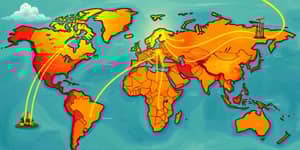
The world's economic landscape is transforming before our eyes, shifting from reliance on traditional giants to the vibrant energy of emerging markets.
This change is driven by demographic advantages and targeted investments in AI and infrastructure, offering new opportunities for growth and innovation.
As global GDP moderates to 2.7-2.8% in 2026, the real story lies in how dynamic economies are unlocking their potential through resilience and strategic focus.
The Rise of Emerging Markets
Emerging economies are no longer on the sidelines; they are at the forefront of global growth.
These regions leverage young populations and domestic demand to build sustainable futures.
Key drivers include supply chain diversification and services exports that cushion global pressures.
For instance, countries like India and Vietnam are capitalizing on these trends to boost their economic standing.
- Demographic dividends from growing, youthful populations.
- Strategic government policies fostering innovation and investment.
- Increased focus on digital and physical infrastructure development.
- Resilience through diversified trade and consumption patterns.
This shift empowers communities and opens doors for international collaboration.
Global Growth Projections: A Resilient Outlook
Despite moderating forecasts, the global economy shows remarkable resilience.
Projections indicate steady growth, with developing economies outpacing larger counterparts.
This is supported by easing inflation and robust domestic activities.
These numbers highlight a bifurcated landscape where innovation and adaptability are key.
Regions like Africa and Latin America are also on an upward trajectory.
Spotlight on Fastest-Growing Economies
Momentum favors dynamic economies that embrace change and opportunity.
India stands out with real GDP growth exceeding 6%, fueled by a rising middle class.
Other stars include Vietnam and Indonesia in Southeast Asia, benefiting from manufacturing shifts.
- India: Resilience through urbanization and IT exports.
- Vietnam: Growth via electronics assembly and infrastructure.
- Saudi Arabia: Diversification into tourism and logistics.
- Argentina: Rebound from structural reforms in energy.
- Mexico: Recovery through nearshoring and USMCA benefits.
These economies demonstrate how strategic industrial policies can drive success.
By 2030, India is expected to enter the top tier of global economies.
Sector-Specific Engines Driving Change
Investments are concentrating in high-potential areas that redefine growth.
Artificial intelligence leads the charge, accelerating business investment and consumer spending.
Infrastructure projects in transport and digital systems are crucial for long-term development.
The energy transition and manufacturing diversification offer new frontiers for innovation.
- AI and Technology: Capex in data centers and software.
- Infrastructure: Government-led projects in India and Saudi Arabia.
- Energy Transition: Renewable sources and mining investments.
- Manufacturing: Supply chain shifts to Southeast Asia.
- Services Exports: IT and business services from India.
China is pivoting to high-value sectors, reducing overcapacity in traditional industries.
This focus ensures sustainable growth and global competitiveness.
Navigating Challenges and Risks
Despite the optimism, significant hurdles remain on the path to prosperity.
Geopolitical tensions and trade conflicts pose top risks for global stability.
Policy shifts and overinvestment in emerging technologies can lead to volatility.
Developing economies face a jobs crisis, with 1.2 billion youth entering the workforce.
Addressing these issues requires coordinated efforts and adaptive strategies.
- Geopolitical Risks: Tariffs and deglobalization trends.
- Policy Adjustments: Fiscal and monetary changes affecting growth.
- Jobs Crisis: Need for productivity and private capital.
- Overcapacity: Challenges in sectors like solar and steel.
By acknowledging these risks, stakeholders can build more resilient economies.
Practical Steps for Unlocking Potential
To harness this new economic era, individuals and businesses can take actionable steps.
Focus on building skills in AI and digital literacy to stay relevant.
Invest in sectors with high growth potential, such as renewable energy and technology.
Leverage opportunities in emerging markets by understanding local dynamics.
Collaborate internationally to share knowledge and resources.
- Enhance Education: Train in tech and infrastructure fields.
- Diversify Investments: Target fast-growing economies and sectors.
- Foster Innovation: Support startups and R&D in key areas.
- Advocate for Policies: Promote business-friendly environments.
- Build Networks: Engage with global communities for insights.
These strategies empower people to seize opportunities in a changing world.
Embracing the Future: A Call to Action
The next generation of economic drivers offers a beacon of hope and progress.
By embracing diversity, innovation, and resilience, we can unlock untapped potential.
Let this be a moment to rethink global collaboration and sustainable growth.
Together, we can build a future where prosperity is shared and inclusive.
Take inspiration from these trends to drive positive change in your own endeavors.
References
- https://researchfdi.com/2026-fastest-growing-global-economies-outlook/
- https://www.deloitte.com/us/en/insights/topics/economy/global-economic-outlook-2026.html
- https://www.worldbank.org/en/news/press-release/2026/01/13/global-economic-prospects-january-2026-press-release
- https://www.goldmansachs.com/insights/outlooks/2026-outlooks
- https://desapublications.un.org/publications/world-economic-situation-and-prospects-2026
- https://www.morganstanley.com/insights/podcasts/thoughts-on-the-market/global-economic-outlook-part-1-serena-tang-seth-carpenter
- https://ceritypartners.com/insights/2026-economic-and-market-outlook/
- https://investor.visa.com/news/news-details/2026/Visa-2026-Global-Economic-Outlook-AI-Adoption-and-Shifting-Trade-Patterns-Drive-Economic-Transformation-Beneath-Steady-Growth/default.aspx
- https://www.weforum.org/press/2026/01/global-risks-report-2026-geopolitical-and-economic-risks-rise-in-new-age-of-competition/
- https://www.ey.com/en_us/media/webcasts/2026/01/2026-global-economic-outlook-navigating-a-bifurcated-landscape