In a world where financial uncertainty can feel overwhelming, crafting a personalized roadmap is essential for long-term security. Traditional budgets often fall short because they freeze in time and fail to adapt to life’s twists and turns.
Enter the money map: a revolutionary way to visualize every dollar you earn, spend, save, and allocate toward debt. This article will guide you through the core principles of money mapping, equip you with actionable strategies, and show you how to align your finances with what matters most.
Money Mapping: The Foundation
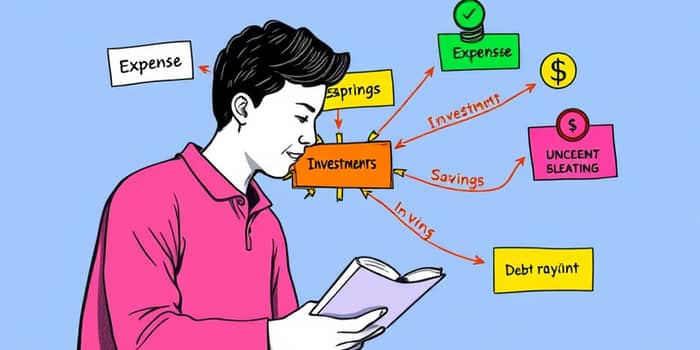
At its core, money mapping is a visual, dynamic alternative to traditional budgeting that organizes income, expenses, savings, and debt payments into an intuitive flowchart. Rather than juggling columns of numbers, you see your full financial picture at a glance, making it easy to spot imbalances and redirect funds.
The purpose of a money map is simple: it empowers you to adjust spending and saving plans as life evolves. By embracing a color-coded system—green for income, red for fixed commitments, orange for debt, and blue for savings—you transform abstract numbers into actionable insights.
- Resources: All available funds, including income, assets, and credit lines.
- Commitments: Fixed obligations such as rent, utilities, and loan payments.
- Goals: Savings targets, investment plans, and debt repayment schedules.
- Spending: Discretionary expenses like groceries, entertainment, and hobbies.
This visual approach fosters clarity and control, enabling regular check-ins that prevent small issues from spiraling into financial stress.
Goal-Setting and Financial Planning
Every journey needs a destination. When your destination is financial freedom, goals must follow the SMART framework: Specific, Measurable, Achievable, Relevant, and Time-bound.
Examples of SMART goals include saving $10,000 for a house down payment by January 2027 or paying off $8,000 in credit card debt within 18 months. By breaking these targets into monthly milestones, you maintain momentum and motivation.
Begin by assessing your current income streams and liabilities. Then establish short-term goals (1–3 years), medium-term goals (3–5 years), and long-term aspirations (5+ years). Document each milestone on your map and review quarterly to celebrate wins and adapt to life changes.
Wealth Creation and Long-Term Planning
Building wealth is about the systematic accumulation of assets through savings, disciplined investing, and risk management. It’s not an overnight endeavor but a committed practice of consistent, patient action.
- Regular Investing: Contribute to retirement accounts, mutual funds, and index funds monthly.
- Diversification: Spread holdings across stocks, bonds, real estate, and alternative assets to mitigate risk.
- Continuous Education: Stay informed on market trends, tax laws, and new financial tools.
- Discipline and Patience: Avoid impulsive decisions and resist get-rich-quick temptations.
A well-constructed money map will allocate a fixed percentage of your income to investments, ensuring your portfolio grows while you sleep.
Budgeting and Cash Flow Automation
Traditional budgets often require tedious tracking of every receipt. Instead, adopt the set it and forget it approach by automating transfers to cover bills, savings, and investments the moment your paycheck arrives.
For example, you might instruct your bank to route 50% of income to living expenses, 20% to savings, 20% to investments, and 10% to discretionary spending. This approach removes decision fatigue and ensures priorities are funded consistently.
Set up routing rules with your financial institution or use apps that support consistent automated transfers every month. Updating these rules as goals change keeps your map current and responsive.
Savings and Emergency Preparedness
No financial plan is complete without a robust emergency fund. Aim to accumulate 3–6 months of living expenses in a liquid, easily accessible account. This buffer protects you from job losses, medical crises, or unexpected home repairs.
Distinguish between short-term savings—funds for the next 1–3 years—and long-term reserves for retirement or major life events. A separate comfort fund can cover personal dreams and discretionary adventures without derailing essential goals.
Mastering Debt Management
Debt can feel like an anchor, but strategic repayment methods can turn it into a stepping stone.
- Debt Snowball: Pay off smallest balances first to build confidence and momentum.
- Debt Avalanche: Attack high-interest debts first to minimize overall interest paid.
- Consolidation and Negotiation: Refinance high-rate loans and negotiate with creditors for better terms.
Map each debt on your chart, noting interest rates and balances. Choose the strategy that aligns with your temperament—quick psychological wins or mathematical savings—and adjust as debts retire.
Aligning Wealth with Personal Values
True prosperity means spending and saving in ways that reflect your priorities. Whether your values center on family education, community giving, or sustainable living, your money map should channel resources accordingly.
Conduct regular audits to identify “leaks”—recurring expenses or subscriptions that no longer serve your goals. Redirect these funds to higher-impact categories, whether charitable donations or early mortgage payoffs.
Tax, Insurance, and Estate Planning
Optimizing taxes and protecting assets are crucial for preserving wealth. Utilize tax-advantaged accounts like IRAs and 401(k)s, and understand the implications of major financial decisions.
Ensure you have adequate coverage for health, life, disability, and long-term care insurance. These policies act as safety nets, preventing worst-case scenarios from wiping out progress.
Finally, establish wills and trusts to secure your legacy. Even basic estate planning guarantees your family’s wishes are honored and can reduce transfer taxes.
Tools and Techniques for Implementing Your Map
A variety of tools can bring your money map to life, from paper and whiteboards to specialized apps and mind-mapping software. Choose a medium that resonates with your style and makes updates effortless.
Consult with financial advisors or leverage platforms that automate routing rules if you prefer a tech-enabled solution. Whatever you choose, consistency is key to seeing your map evolve with your life.
Overcoming Common Challenges
Even the most meticulously crafted map can face obstacles. Unexpected expenses, goal drift, or life changes may test your resolve. Combat these by keeping a robust emergency cushion, scheduling quarterly reviews, and viewing setbacks as data points for improvement.
By keeping your map front and center—whether on your desk, your phone, or your mind—you transform abstract goals into living, adaptable plans.
Charting a course to prosperity is not a one-time event but an ongoing voyage. Armed with a comprehensive money map, clear objectives, and disciplined execution, you’ll navigate the ups and downs of life with confidence. Begin today by sketching your flowchart, assigning colors, and embarking on the most empowering financial journey of your life.
References
- https://www.healthyrich.co/p/create-a-money-map
- https://www.equiruswealth.com/blog/crafting-your-path-to-financial-prosperity-wealth-creation-and-wealth-planning
- https://financialfootwork.com/blogs/my-money-blog/money-mapping
- https://scrambleup.com/knowledge-base/beyond-the-million-sound-strategies-for-financial-prosperity
- https://www.businesswire.com/news/home/20250929057938/en/Fruitful-Unveils-Money-Map-the-First-Ever-Automated-Money-System-That-Transforms-Personalized-Advice-into-Action-with-Just-One-Click
- https://worthadvisors.com/creating-sustainable-wealth-strategies-for-generational-prosperity/
- https://www.youtube.com/watch?v=b-VJGqfwNzo
- https://mjtassociates.com/7-expert-tips-for-effective-financial-planning-advice-for-future-prosperity
- https://www.skyboundwealth.com/news-and-insights/how-moneymap-brings-financial-planning-to-life
- https://mensprosperityclub.com/achieve-prosperity-wealth-with-smart-financial-strategies/
- https://moneymap.io
- https://prosperitywealthplanning.com
- https://moneywithkatie.com/setting-up-my-perfect-financial-system-money-mapping/
- https://cliffordswan.com/wealth-planning/nurturing-prosperity-the-journey-of-wealth-management-across-lifes-stages/
- https://www.protectedincome.org/your-money-map/
- https://envisionwealthstrategy.com/purposeful-prosperity-5-strategies-for-aligning-your-wealth-with-your-values/
- https://www.fidelity.com/learning-center/personal-finance/family-mapping
- https://prosperitycapitaladvisors.com/financial-planning/